
Skirting and architrave, mitred and scribed
Skirting and architrave are the trim your eye runs along every day, so the joints have to close. We scribe internal corners rather than relying on filler, match period profiles where the old ones survive, and leave every length fixed, filled and ready for your decorator.

- Materials
- MDF, moisture-resistant MDF, softwood or oak, chosen for the room
- Period houses
- Old profiles matched from a length still on the wall
- Corners
- Internal corners scribed and glued, external corners mitred
- Finish
- Fixed, filled and ready for your decorator to paint
Scribed, not filled: why our internal corners stay closed
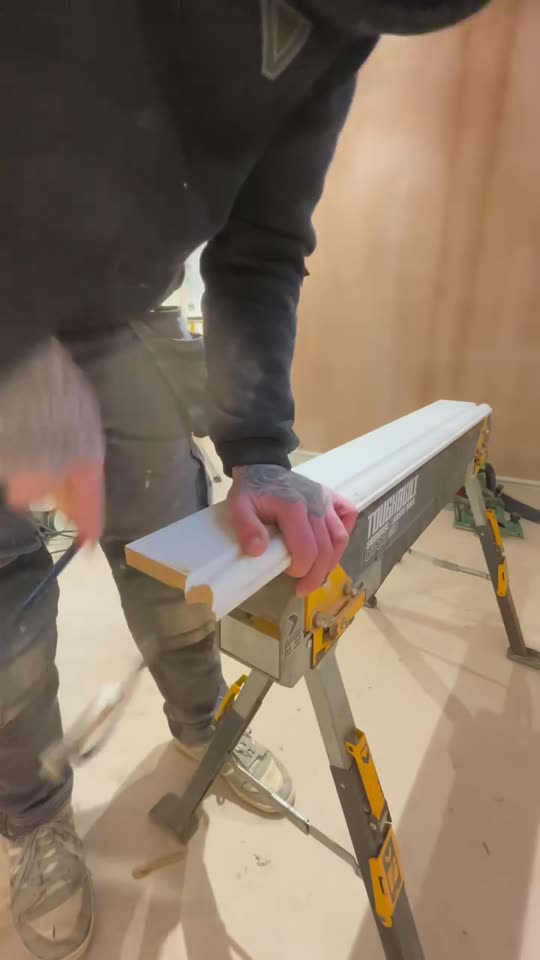
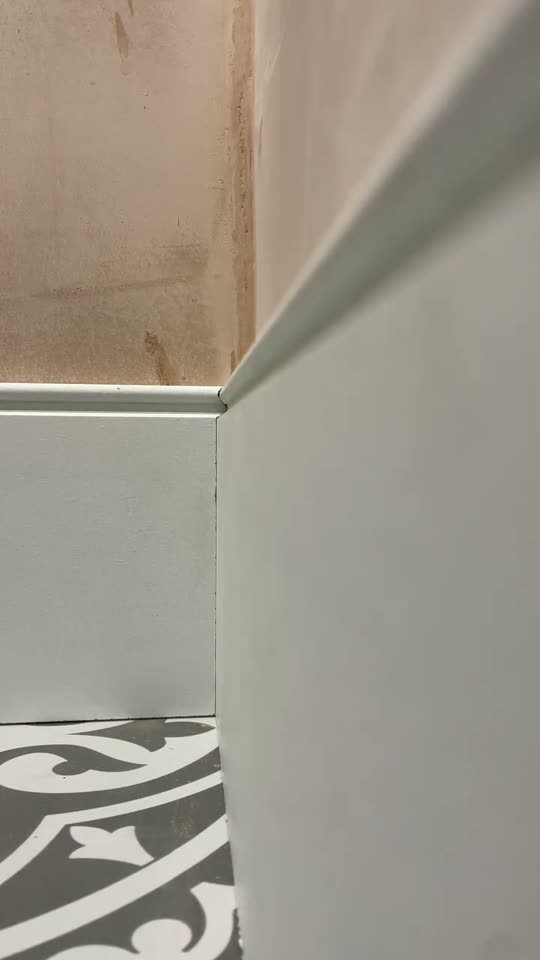
There are two ways to turn an internal corner. You can cut both boards at 45 degrees and push them together, which looks fine on the day. Or you can run one board into the corner and cut the end of the next to the exact shape of its face, so it sits over the first like a key in a lock. That's a scribe.
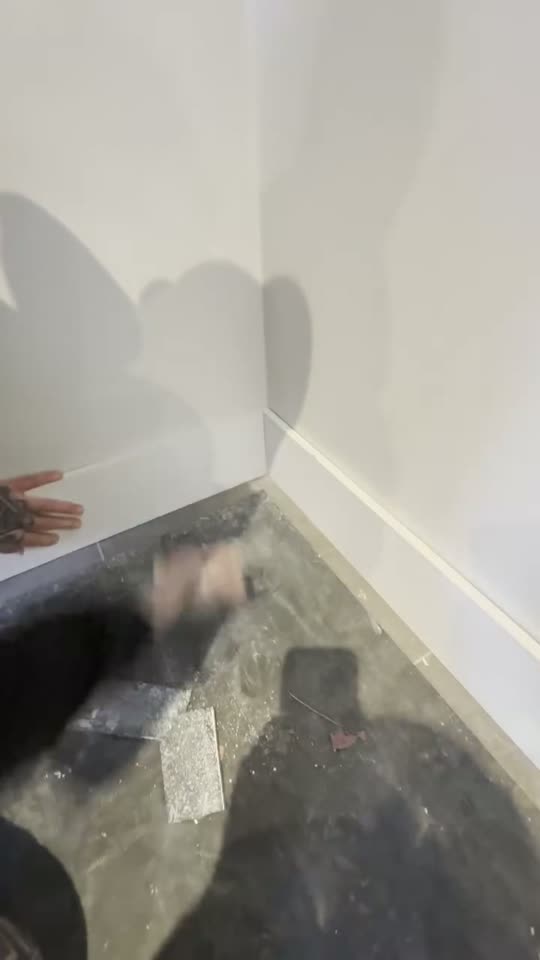
We scribe every internal corner and mitre the external ones. The reason is movement. Timber shrinks and swells with the seasons, and walls are rarely at 90 degrees. A mitre opens up as the two boards pull apart, and caulk only hides it for a while. A scribe still looks closed when the board moves, because one face is still sitting tight on the other. We PVA our scribes too, and wipe them clean so your decorator has nothing to sand.
MDF, softwood or oak: which skirting to choose
For painted skirting, MDF nine times out of ten. It's straight, it has no knots to bleed through white paint, and it doesn't shrink at the joints the way softwood does. Softwood is the better choice when you're matching an old moulded profile, want a stained finish or need a long length that takes a knock. Oak is for rooms where you want to see the grain, and it ages well, but it costs more and it's harder work to cut and scribe.
| Material | Best for | Watch out for |
|---|---|---|
| Standard MDF | Painted skirting in dry rooms | Swells if it gets wet; edges are soft until painted |
| Moisture-resistant MDF | Bathrooms, kitchens, utility rooms, by a back door | Copes with damp air, but it isn't waterproof |
| Softwood | Period profiles, stained finishes | Moves with the seasons; knots need sealing |
| Oak | A natural or oiled finish | Cost, and matching the colour to existing oak |
Moisture-resistant MDF is the green-cored board, made to the MDF.H standard in EN 622-5. MEDITE, who make one of the most common ones, describe it as moisture-resistant and not waterproof, so it's right for a bathroom but wrong for a floor that floods. You'll also see fire-retardant MDF skirting for sale. In a house you don't need it: Approved Document B leaves skirtings and architraves out of its definition of a wall, so there's no fire rating for them to meet, and we won't sell it to you as an upgrade.

Matching old skirting in a period house
Victorian and Edwardian houses often have deep moulded skirting, sometimes 200mm or more, and 1930s semis tend to have a lambs tongue or a torus. When a length has been lost to a new doorway or a damp wall, the new piece has to match or it shows in every photo of the room.
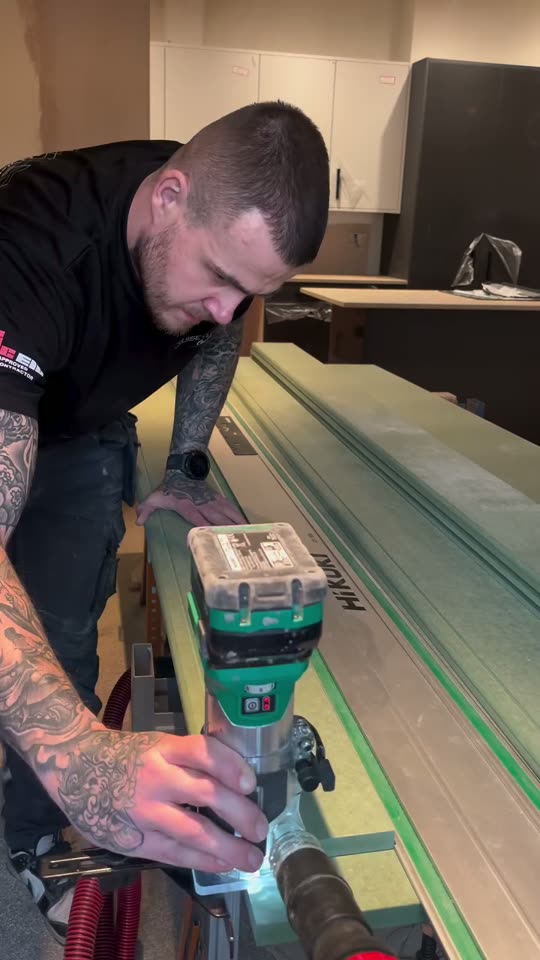
We start with a length that's still on the wall. Plenty of period profiles are close to a stock pattern, and a tracing is often enough to find one. When nothing off the shelf is close, there are two routes. A specialist mill such as Skirting Boards Direct will run a profile to match a sample, which takes longer than ordering stock. Or we make it ourselves. In November 2025 nothing close enough was on sale for one job, so we ripped MDF to width and routed the profile on site.
Leave the old boards in place until we've seen them. A length on the wall tells us the height, the profile and how it meets the architrave, and an offcut in a skip doesn't.
Architrave, the 7mm margin and where it meets the skirting
Architrave is the frame round a door, and it's where trim goes wrong most often. It shouldn't sit flush with the edge of the lining. We set it back by 7mm, so there's a small even step all the way round, a margin your eye reads as deliberate. That small step also hides a lining that isn't perfectly straight, because there's no edge for the eye to run along.
The awkward joint is at the foot, where the architrave meets the skirting. A thin skirting sticks out past a slim architrave, and a deep one swallows it. Our 2022 reel shows the fix on an ogee architrave: mark the 7mm margin, cut a 45 degree triangle out of the skirting, and the two mouldings marry. Other answers are a plinth block, a neat mitred stop end where the skirting finishes against a door frame, or a stepped skirting cut as one piece to follow a change in floor level.
New doors come first. Architrave only goes on once the door is hung and the lining is fixed, so if you're changing doors and trim together, it's one job for one team. Our internal doors page covers the doors themselves.

When skirting goes on: before or after the floor, the plaster and the paint
The order of work is the question we're asked most. Get it wrong and you end up with a gap under the skirting, or new boards ripped off so a floor can go in.
| Job | Skirting goes on | Why |
|---|---|---|
| New wood, laminate or LVT floor | After the floor | The skirting sits on top and hides the expansion gap round the edge |
| New carpet | Before the carpet | Set a little off the floor so the fitter can tuck the carpet under |
| Floor tiles | After the tiles | So the skirting sits on the finished floor, not the screed |
| Plastering | After the plaster is dry | Fixing to wet plaster traps moisture and the boards can move |
| New doors | Architrave after the door is hung | The architrave is set from the fixed lining, and the skirting stops on it |
| Radiators | With the radiator off the wall | The plumber takes it off, the skirting goes on, then it goes back |
| Decorating | Before the final coats | We leave it fixed and filled, ready for your decorator |
If your skirting is staying and only the floor is new, the floor gets cut in to the skirting or finished with a bead instead. Our flooring page covers the floor side.
Old houses: lead paint, asbestos and the plaster behind
Taking old skirting off is usually the messiest part of the job. In older houses the boards were often nailed to timber grounds, and tired plaster can come away with them. We'll tell you before we start if that's likely, and making good goes in the quote rather than turning up as a surprise.
Old paint is the bigger concern. The HSE says the risk from lead is highest when paint is removed in properties built before the 1980s, and that dry sanding and burning off old paint are among the riskiest jobs. So boards that are coming out are taken off whole, and old paint on boards that stay is never dry sanded or burnt off inside your home.
Skirting is timber, but taking it off can disturb what's round it: textured coatings, old floor tiles and the adhesive under them. The HSE says buildings put up after 2000 are unlikely to contain asbestos, as it was banned in 1999. In anything older, if suspect material turns up at the wall line, we stop and get it checked before going on.

Do you need Building Regs or consent to change skirting?
Not in an ordinary house. Replacing skirting and architrave isn't building work, interior work isn't development, and fixing to a party wall needs no notice. The rule to watch is listed building consent, because historic skirting is part of a listed building. In older houses, the HSE's lead paint advice matters more than any regulation.
| Rule | What it means for you | Source |
|---|---|---|
| Building work means things like extending a building, a material alteration or fitting a controlled fitting. Replacing trim is none of these. | No Building Control application for skirting and architrave on their own. | Building Regulations 2010, regulation 3 |
| For fire spread over linings, a wall does not include architraves, cover moulds, picture rails, skirtings and similar narrow members. | Skirting needs no fire rating in a house, so fire-retardant MDF isn't required. | Approved Document B Volume 1, paragraph 4.3 |
| Works that affect only the interior of a building are not development. | No planning permission for new skirting or architrave, unless the house is listed. | Town and Country Planning Act 1990, section 55 |
| A listed building includes fixtures attached to it, and works that would affect its character need listed building consent, inside as well as out. | Taking out original skirting or architrave can need consent. Repairing with matching timber is often the easier route. | Planning (Listed Buildings and Conservation Areas) Act 1990, sections 1(5) and 7 |
| Drilling into a party wall for plugs and screws to fix ordinary fittings is generally too minor to need a notice. | Skirting on a party wall needs no party wall notice. | The Party Wall etc. Act 1996: explanatory booklet |
| The risk from lead is highest when removing paint in properties built before the 1980s. Dry sanding and burning off old paint are among the riskiest jobs. | Old boards come off whole, and old paint isn't dry sanded or burnt off inside your home. | HSE: lead FAQs |
Who signs it off
- On a listed house, the owner applies for listed building consent. Speak to the council's conservation officer before anything comes off the wall.
- If the skirting is part of a bigger notifiable job, such as an extension or a loft conversion, it goes in under that job's approval with nothing separate to sign off.
- We'll tell you at the site visit if anything in the room needs checking before the old boards come off.
Checked November 2026 against legislation.gov.uk, Approved Document B, the Party Wall booklet and HSE guidance
Planning permission or Building Regulations: which do you need?
How a skirting and architrave job runs
Photos and the rooms
You
Send photos of the rooms, the worst corner and a close-up of the old profile, plus how many doors there are and your postcode.
Measure and survey
Us
We measure each run, count the internal and external corners, check the walls with a straight edge and look for damp, blown plaster and pipes.
Choose the set
You
Profile, height and material, with the architrave from the same family, so a tall torus skirting doesn't end up next to a skinny modern architrave.
Written quote
Us
The rooms, the materials named by profile and height, removal and making good, and who paints.
Old boards off, new boards on
Us · Once the plaster is dry and any hard floor is down
Architrave first, then skirting. Internal corners scribed, external corners mitred, every length fixed and filled.
Ready for paint
You
We walk round it with you, then it's over to your decorator for the final coats.
How much does it cost to fit skirting and architrave?
We don't put prices on the website, because the metres are the least of it. A straight run on new plaster goes quickly. A bay window with six corners on a wall that wanders 10mm takes far longer than its length suggests. Count your doors and corners as well as your metres, and the quote will make sense.
Number of corners
Every internal corner is scribed and every external one mitred, and that's where most of the time goes, not in the straight runs.
What helps: Count the corners, including round chimney breasts and bay windows.
Number of doors
Each door side is a set of architrave, two legs and a head, plus the junction where the skirting meets it.
What helps: Tell us whether both sides of each door are being done.
Profile height and material
Taller boards cost more, are harder to scribe and need more fixings on an uneven wall. Oak costs more than MDF to buy and to cut.
What helps: Pick the profile before the quote, or ask us to price two options.
Walls out of line
Wavy plaster means scribing the bottom edge to the floor and packing or planing where linings stand proud.
What helps: Hold a straight edge on your worst wall and send us a photo.
Removing the old and making good
Old boards on timber grounds can bring plaster with them, and that has to be repaired before the new goes on.
What helps: Tell us if the old boards are original or have been replaced before.
Period matching
A stock profile arrives in days; a run to match a sample takes setting up, and making it ourselves takes machine time.
What helps: Keep a length of the original on the wall until we've seen it.
Who decorates
Left filled and ready for your decorator is a different job from painted by us.
What helps: Decide who's painting before we quote, so it's priced the right way.
What our written quote lists
- Which rooms and which door sides are included
- The profile, height and material, named
- Removal of the old skirting, and making good
- Who supplies the materials
- Whether it's left ready for your decorator or painted
- Anything that depends on other trades, such as the floor or the plaster
Per metre, per room or for the job?
A price per metre sounds simple, but it ignores the corners, the doors and the walls, which is where the time actually goes. Two rooms with the same metres can be very different jobs. That's why we price the job, not the metre, and the quote shows what's in it.
To work out what to buy, try our skirting length calculator. It gives metres, lengths and corner counts, not prices. And if you're comparing quotes, our guide to comparing builders' quotes shows what to check.
Quick tool: Work out how many lengths of skirting and architrave
Send us photos of the rooms, a close-up of the old profile and how many doors there are. We'll tell you what's involved.
Get a quoteWhere skirting jobs go wrong, and what we do instead
Most of the faults in a skirting job don't show on the day. They show next winter, when the heating has been on for a few months and the timber has moved.
- The shortcut
Internal corners mitred and then caulked
What we do insteadInternal corners scribed and glued, so they stay closed when the boards move
- The shortcut
Skirting fitted before a laminate floor, leaving a gap or no room for expansion
What we do insteadThe hard floor goes down first, and the skirting sits on top to hide the gap
- The shortcut
Architrave fitted flush to the lining edge, showing every wobble
What we do insteadAn even 7mm margin all the way round
- The shortcut
A thin skirting sticking out past the architrave at the door foot
What we do insteadThe skirting cut back so the architrave sits on it, or a plinth block
- The shortcut
Standard MDF in a bathroom or by a back door
What we do insteadMoisture-resistant MDF, or a hardwood, where the air gets damp
- The shortcut
New boards fitted over old ones
What we do insteadThe old boards taken off, so the face of the new one doesn't stand proud of the architrave
- The shortcut
Old paint dry sanded in a pre-1980s house
What we do insteadOld boards taken off whole, with no dry sanding or burning off inside your home

Recent skirting and trim from our own posts
Where a post gives the month, it's in the caption. Most of our skirting work is on video, so the reels further up this page show the joints closer than any photo.
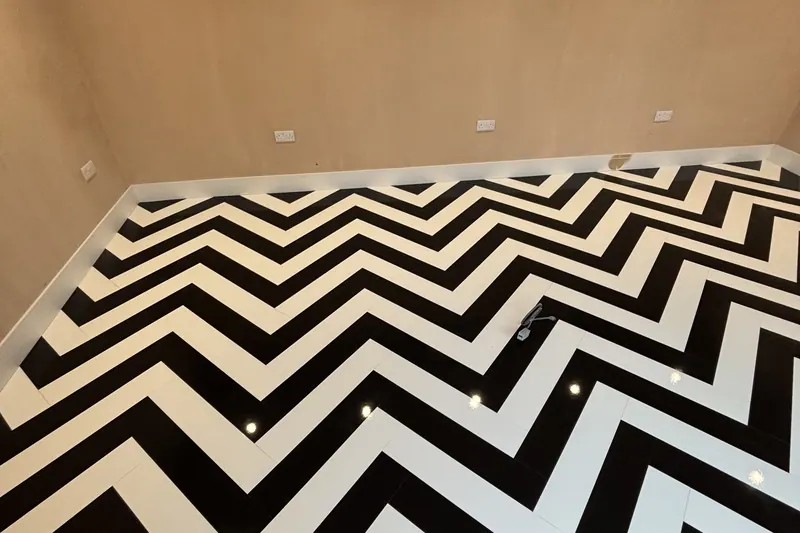
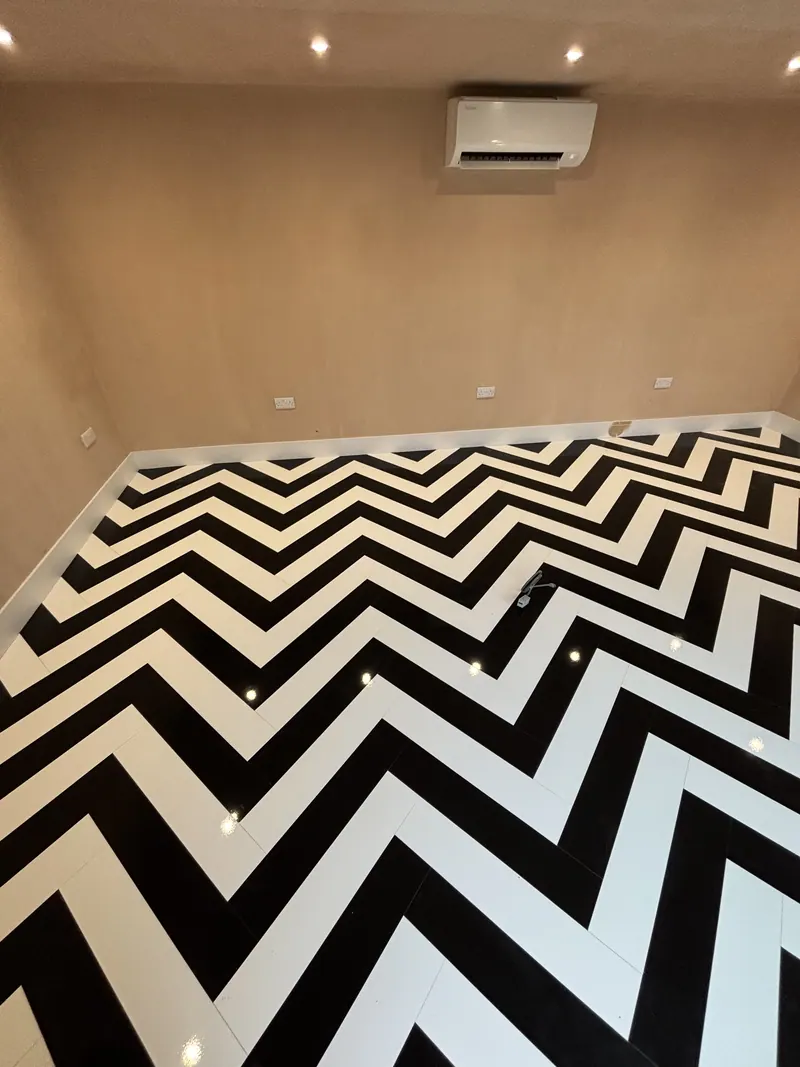
White skirting run along a full wall above a herringbone plank floor. 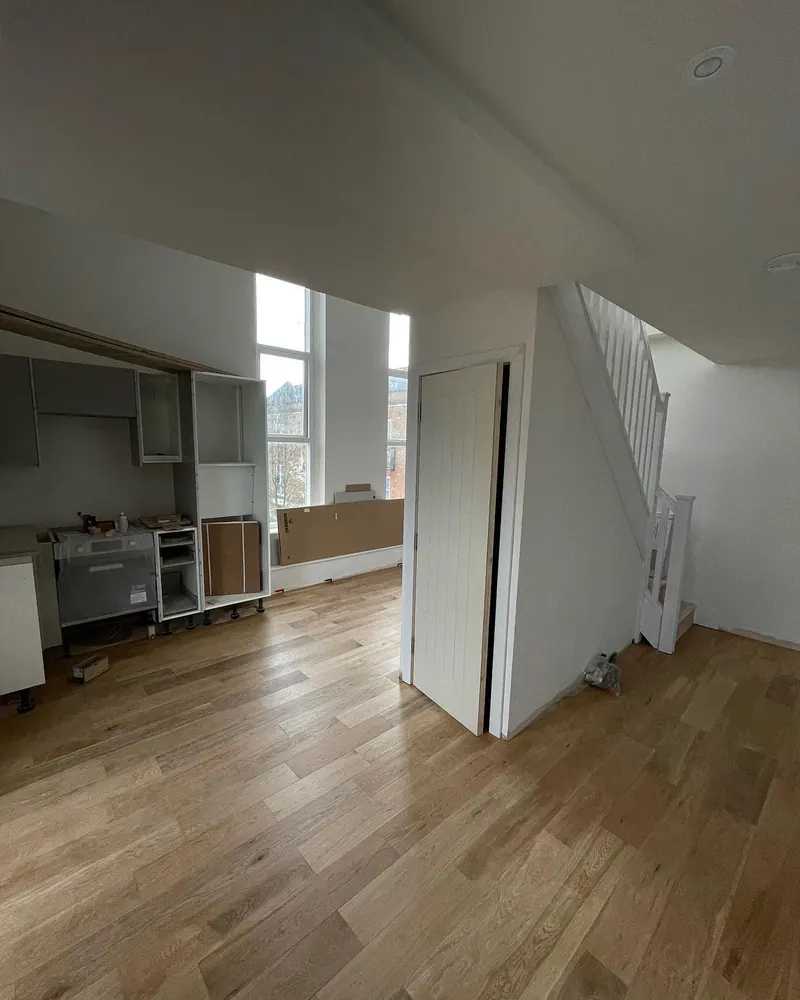
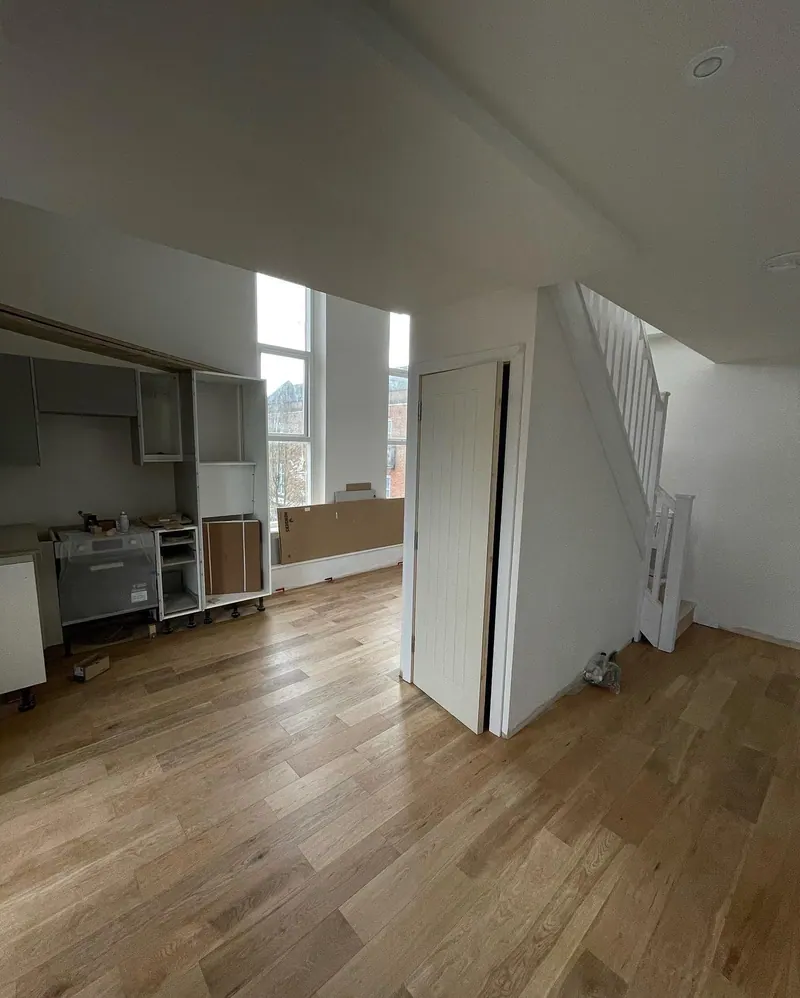
Engineered oak floor laid across an open plan flat mid-fit, February 2022. 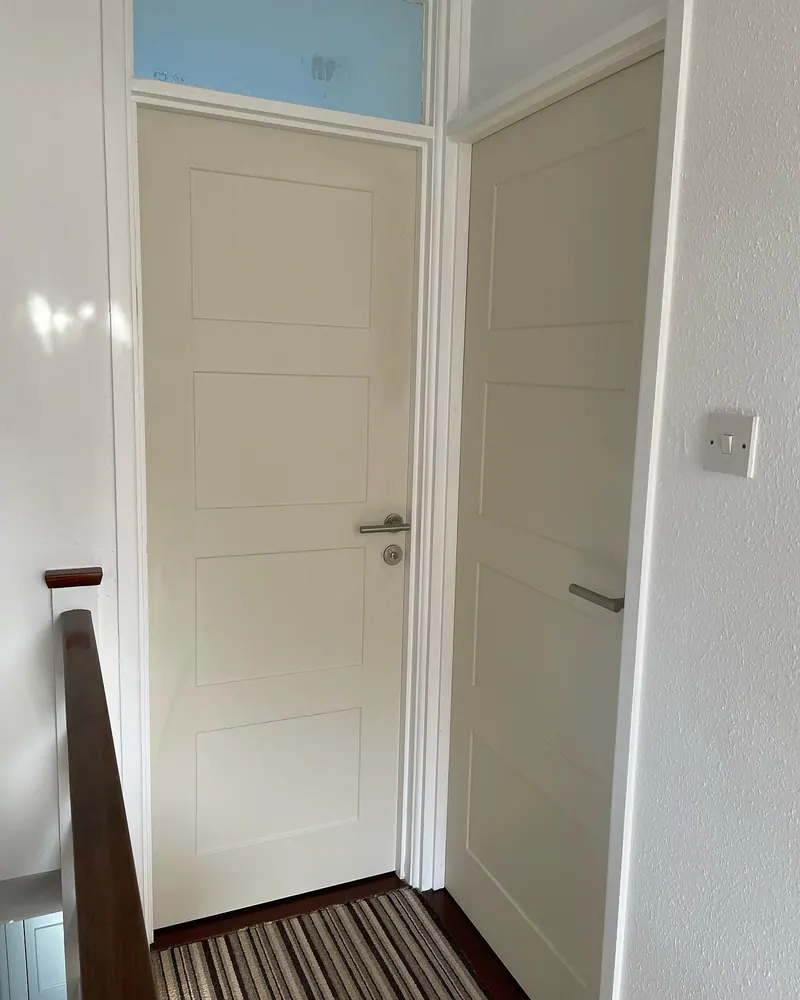
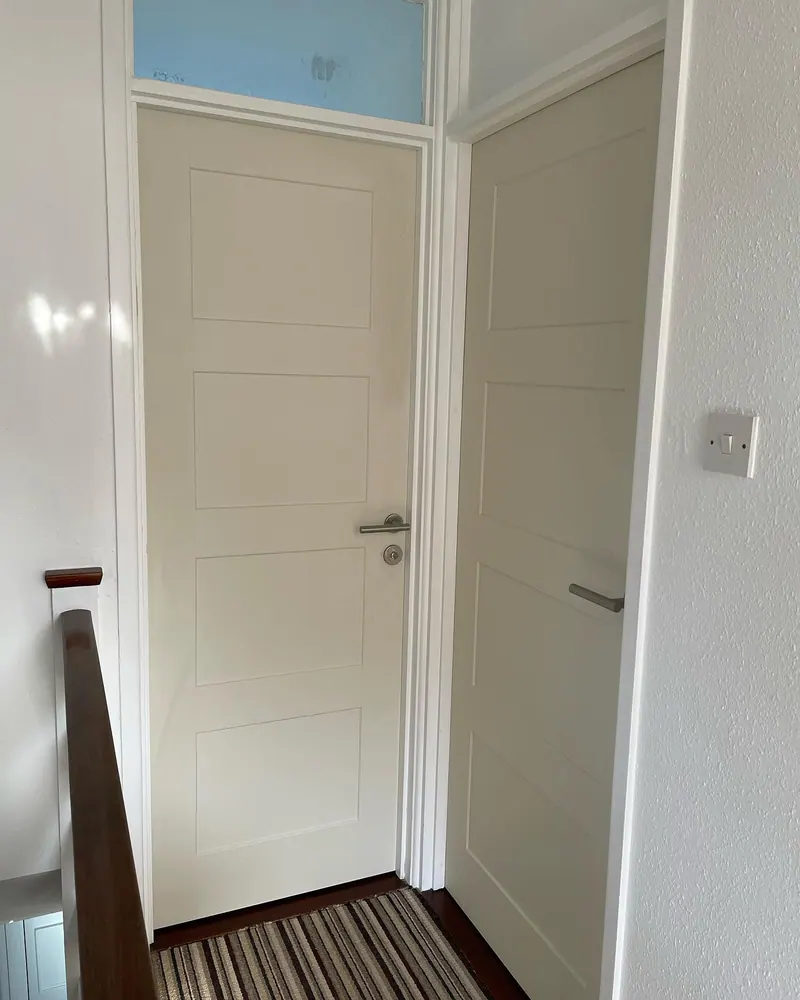
Two new white four panel Shaker doors side by side on a landing, February 2022. 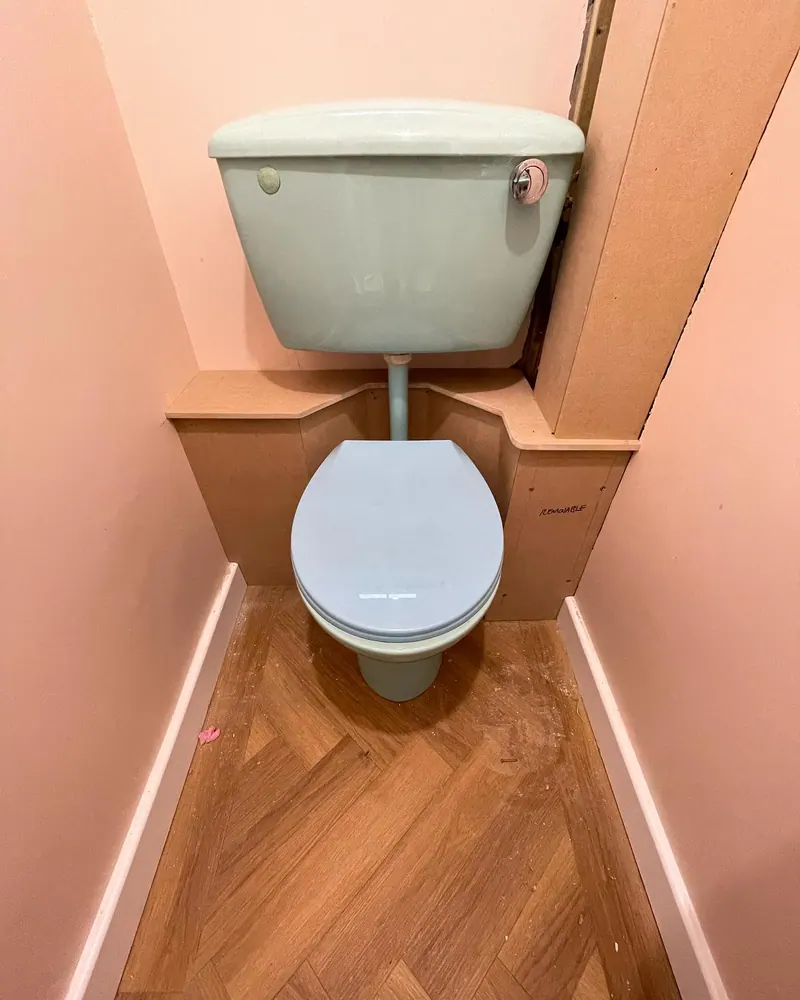
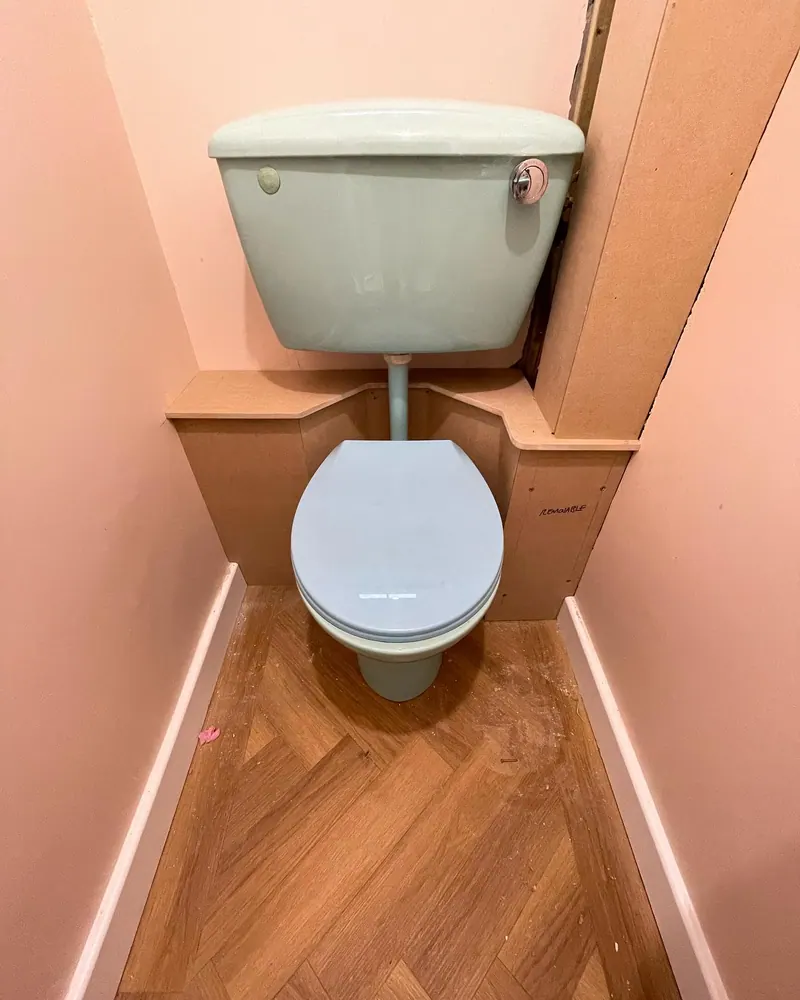
White skirting and raw MDF pipe boxing in a downstairs WC, March 2022. 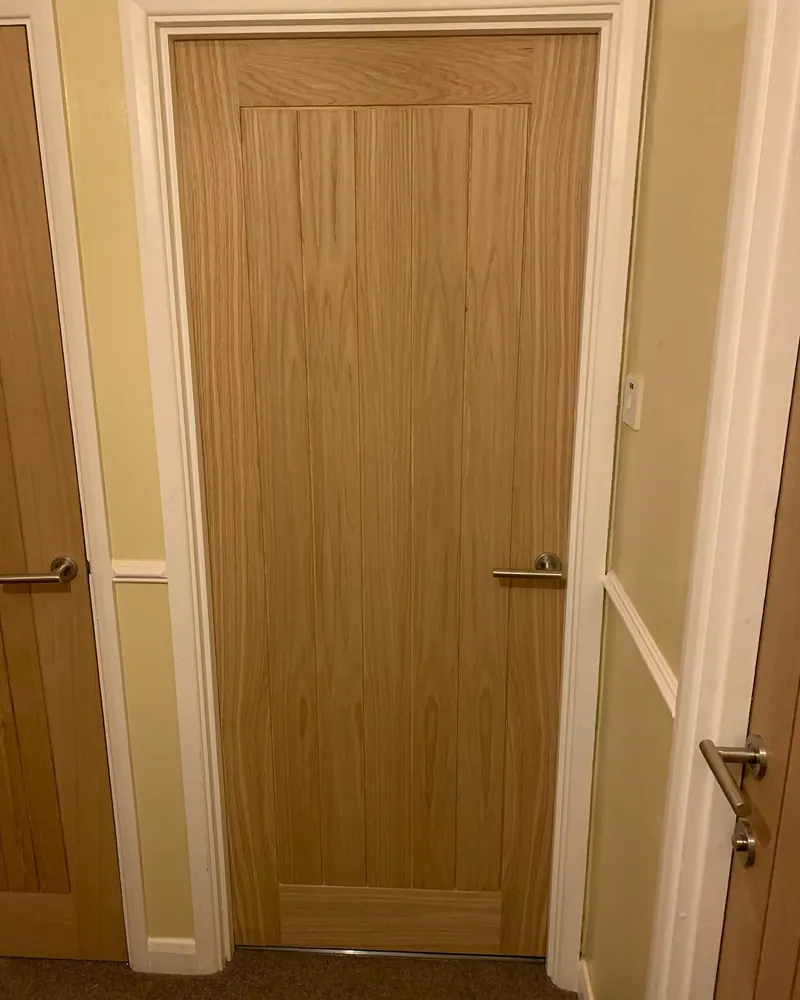
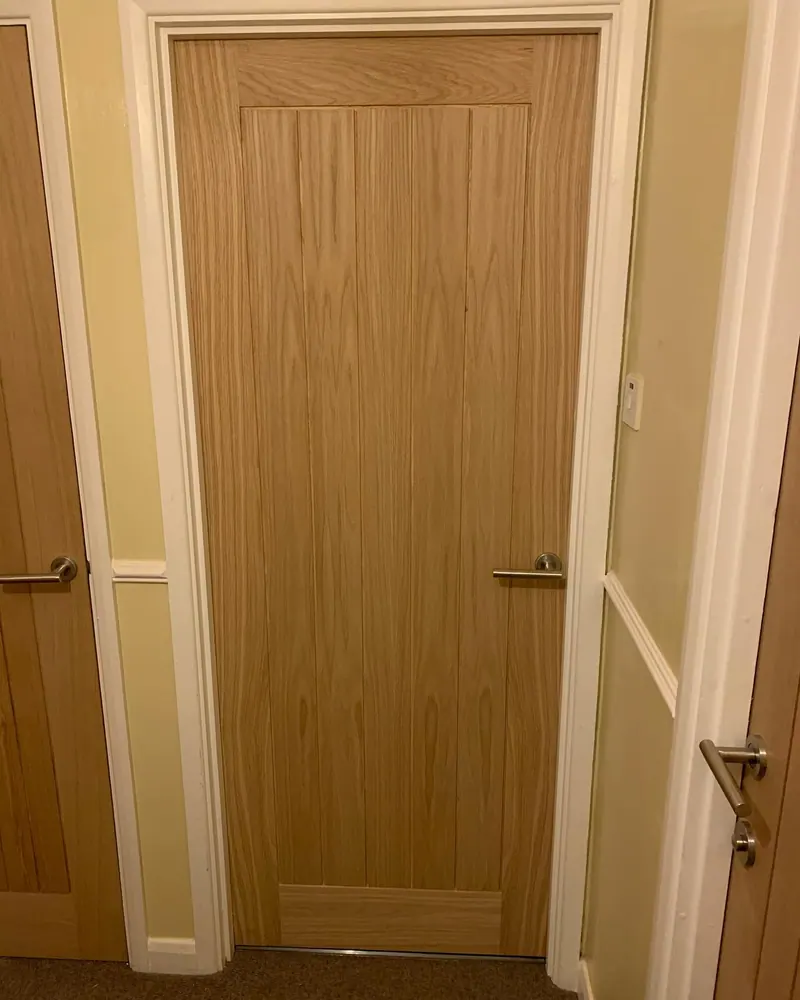
White architrave round an oak cottage door, one of 12 doors on the same job, November 2021.
Questions people ask us about skirting and architrave
Something else? Call or WhatsApp 07494 000065.
Does skirting go on before or after the floor?
After a hard floor, almost always. Laminate, engineered boards and LVT go down first, then the skirting sits on top and hides the expansion gap. Carpet is the other way round: skirting first, set a little off the floor so the fitter can tuck the carpet in. If your skirting is staying, the new floor gets cut in to it instead.
MDF or pine skirting: which is better?
For painted skirting, MDF nine times out of ten. It's straight, has no knots to bleed through white paint and doesn't shrink at the joints. Pine is the better choice when you're matching an old moulded profile or staining the wood. In bathrooms and kitchens we use moisture-resistant MDF, which copes with damp air but still isn't waterproof.
Can you match my old skirting?
Usually, yes. We take a tracing or a sample from a length that's still on the wall, and plenty of Victorian, Edwardian and 1930s profiles are close to stock patterns. When nothing off the shelf is right, we have it run to match or make it ourselves. That's what happened in November 2025, when no one sold a close enough match.
Do you mitre or scribe the corners?
We scribe the internal corners and mitre the external ones. On a scribe, one board runs into the corner and the next is cut to the shape of its face, then glued. A 45 degree mitre on an internal corner looks fine on day one and opens up as the timber moves and the walls show they were never square.
Can new skirting go over the old?
It's possible, but it rarely looks right. It pushes the face of the skirting out past the architrave and the door lining, and that always shows at the door. We'd normally take the old boards off. If they're originals worth keeping, we'd rather repair them and match any missing lengths.
My house is listed. Can I replace the skirting?
Talk to the council's conservation officer first. In a listed building the skirting counts as part of the building, and changing it in a way that affects its character needs listed building consent. Repairing with matching timber is often fine. Ripping out originals usually isn't, and doing it without consent is an offence.
Do I need planning permission or Building Regulations approval?
No, not in an ordinary house. Skirting and architrave are interior work, so there's no planning permission, and replacing them isn't building work under the Building Regulations. Fixing to a party wall doesn't need a notice either. The listed building rule is the one to watch.
Is old paint on my skirting dangerous?
It can be. Houses built before the 1980s may have lead in the old paint layers, and the HSE says dry sanding and burning off are among the riskiest ways to deal with it. Boards that are coming out come out whole, and we don't dry sand or burn off old paint inside your home.
Will it be ready for my decorator?
Yes. Every length is fixed and filled, the scribes are glued and wiped clean, and the joints are tight enough that your decorator is painting, not filling gaps. Tell us at the quote if you'd rather we painted it too, so it's priced that way.
Do you price skirting per metre?
No, we price the job. The corners, the doors and the state of the walls decide how long it takes, not the metres. Two rooms with the same length of skirting can be very different jobs, so a per-metre price is either too high for one or too low for the other.
Our skirting swelled after a leak. Can it be matched?
Usually. We take the profile from a sound length and find or make a match, and the wall behind has to be dry before anything goes back. Door linings and architrave often suffer at the same time. See water-damaged joinery for how we put it all back.


Skirting and architrave fitters, town by town
We're based in Crawley and work across West Sussex and Surrey. Each town page covers the houses there and the profiles you're likely to find in them.
West Sussex
- Skirting and architrave in CrawleyNew-town houses where plain skirting and slim architrave are ripe for a taller, period-style set.
- Skirting and architrave in BillingshurstWeald Clay that moves with the seasons, which is exactly why we scribe rather than caulk.
- Skirting and architrave in Burgess HillOlder streets near the centre and newer estates on the edge of town.
- Skirting and architrave in CuckfieldListed and timber-framed houses, where repairing original skirting usually beats replacing it.
- Skirting and architrave in East GrinsteadOlder and listed houses around the High Street, where original trim may need consent to change.
- Skirting and architrave in Haywards HeathVictorian and Edwardian villas with tall skirting, and 1930s semis with lambs tongue profiles.
- Skirting and architrave in HorshamVictorian and Edwardian terraces with deep moulded skirting that's worth matching, not replacing.
Surrey
- Skirting and architrave in CaterhamSplit-level houses on the hills, where stepped skirting follows the change in floor level.
- Skirting and architrave in CranleighOlder cottages and newer homes, where oak or a simple softwood profile suits the room.
- Skirting and architrave in DorkingOlder cottages towards the Surrey Hills, where walls wander and every board needs scribing.
- Skirting and architrave around GatwickCharlwood and the villages: old listed houses, and newer homes with plain stock trim.
- HorleySurrey, Reigate & Banstead planning, wet clay by the Mole, and every address in Gatwick's crane zone.
- Skirting and architrave in LingfieldA historic village centre where original joinery in listed houses is worth keeping.
- Skirting and architrave in OxtedEdwardian houses with tall skirting and picture rails, and Old Oxted's listed buildings.
- Skirting and architrave in RedhillVictorian terraces with chimney breast alcoves, so plenty of internal corners to scribe.
- Skirting and architrave in ReigateVictorian terraces and 1930s semis, where a lost length of old profile needs matching.
Worth reading before you change your skirting


Changing the skirting or architrave?
Send us photos of the rooms and a close-up of the old profile, with how many doors there are. We look at what you send, come out to measure if it's a job for us, and you get a written quote.
Useful to send
- Photos of each room, including the worst corner
- A close-up of the old skirting and architrave profile
- How many doors, and your postcode