
Storm-damaged roof made safe, day or night
Yes, we take storm calls at any hour, and we'll tell you honestly on the phone when we can get to you. On the night the job is stopping the water: a tarpaulin battened down, holes boarded from the loft, loose tiles lifted off. Then we come back and repair the timber underneath properly.

- 24 hours, 7 days
- Nights, weekends and bank holidays, by phone or WhatsApp on 07494 000065
- On the van
- Tarpaulins, timber battens, 18mm ply and OSB sheets, screws and fixings
- Safety at height
- Loft side first in the dark or a gale, the roof itself once it's safe
- The proper repair
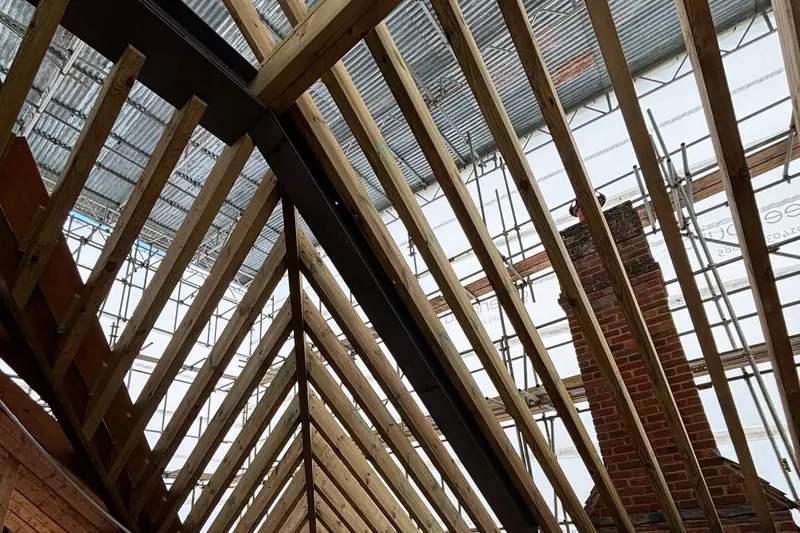
- Rafters, battens, sarking boards and fascias repaired by carpenters, not patched over
What happens on the night a storm opens your roof
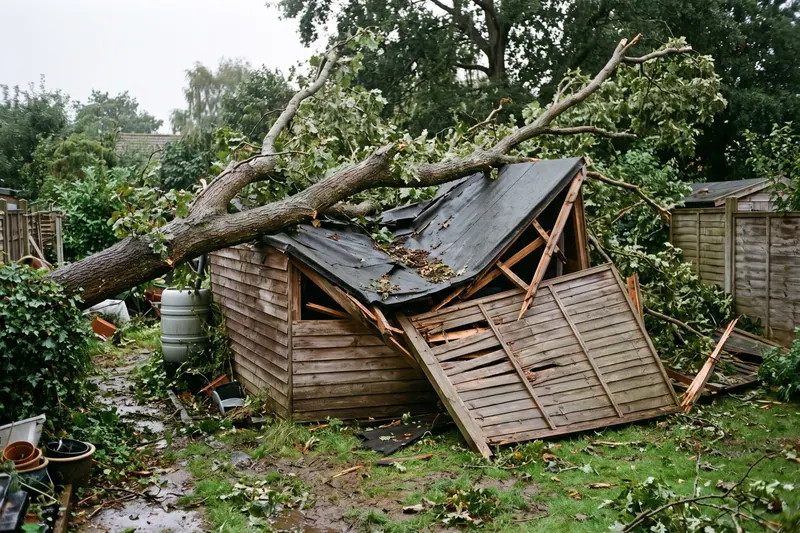
Most storm calls start the same way. A few tiles or a ridge piece have gone, the wind has got under the felt, and water is running down the inside of the roof onto the loft insulation. The job on the night isn't to fix the roof. It's to stop any more water getting in, so the damage you claim for in the morning is the damage the storm did and no more.
We start inside where we can. From the loft we can see where the light or the rain is coming through, check whether a rafter or a sarking board has broken, and screw a sheet of ply or OSB over a hole from underneath. Then, once it's safe to be up there, the tarpaulin goes on outside: lapped well past the damage, edges rolled round timber battens and fixed so the wind can't get its fingers under it, with as few fixings through good tiles as we can manage.
We're honest about the weather. A wet clay roof in the dark with the wind still gusting is where people get badly hurt, and a tarpaulin put on by someone who then falls off helps nobody. If the roof can't be worked on safely that night, we'll do everything we can from the loft and inside, and be back on the roof at first light. We'll tell you that on the phone, not after we've turned up.
What a storm make-safe covers
Every roof is different, but these are the jobs that come up after a big blow.
Tarpaulin over the damage
A heavy tarpaulin lapped over sound tiles on every side, held with battens so nothing is loose to blow off again.
Holes boarded from the loft
Ply or OSB screwed across the rafters from inside where the felt and boards have torn, so the opening is closed before the tarp goes on.
Loose tiles and ridges lifted off
Slipped tiles, cracked ridge pieces and hanging slates taken down before they drop on a path, a car or someone's head.
Torn flat roof coverings
Where a felt or rubber covering has peeled back, the deck is checked and covered. The rebuild is on our flat roofs page.
Fascias, soffits and bargeboards
Boards ripped off at the eaves or the gable are taken down or fixed back so they can't swing. The replacement is a fascia and soffit job.
Photos and an itemised invoice
The damage photographed before and after, and every part of the make-safe written up line by line for your insurer.
From the phone call to the roof repaired
Call or WhatsApp
You
Ring 07494 000065 or send photos taken from the ground and the loft hatch. Tell us where the water is coming in.
An honest arrival time
Our team
We tell you straight when we can be there. On a storm night that depends on how many roofs are open and where they are.
Make safe
Our team
Loft side first, then the tarpaulin and battens outside when it's safe. Everything is photographed as we go.
The claim
Your insurer · Some insurers inspect before agreeing a permanent repair
You report it with our photos and invoice. Your insurer may send someone to look before the repair is agreed.
Timber repaired
Our team
Broken rafters sistered, battens and boards renewed and fascias put back, so the roof is ready for the tiles to go back on.
What to tell us when you ring about a storm-damaged roof
- Your address and postcode
- Which room the water is coming into, and whether the ceiling is sagging
- Bungalow, two storeys or three, so we know what ladders and access to bring
- Photos of the roof from the ground or a window. Please don't climb up to take them
- Whether any lights or sockets are near the water
- If it's a terrace or semi, whether next door's roof is damaged too
After the tarpaulin comes the carpentry
A tarpaulin buys time. It doesn't mend anything. Once the storm has passed, we come back and look at the timber properly: a cracked rafter, a row of split battens, sarking boards that soaked all night. That's carpentry, and it's the part of a storm repair that gets skipped when the tiles are simply nailed back on top.
Re-tiling, lead flashings and slating are a roofer's trade. We repair and renew the timber under them, and we're happy to work alongside your roofer or the one your insurer sends. Bigger timber faults, a dropped purlin or rot that was there long before the storm, are covered on our roof timber repairs page.

What insurers and the rules say about storm roof repairs
Storm damage is often covered by buildings insurance, but check your policy: claims turn on whether there was a storm and whether it caused the damage. Small repairs don't normally need Building Control. And roof work is dangerous at any hour, so the law says it has to be planned to be done safely.
| Rule | What it means for you | Source |
|---|---|---|
| When a storm claim is refused, the Financial Ombudsman asks whether there was a storm on the date, whether the damage is the kind storms cause, and whether the storm was the main cause. | Dated photos of the damage, taken before anything is cleared, help answer all three. | Financial Ombudsman Service: storm damage |
| Many policies exclude gradual damage and wear and tear. The ombudsman says the insurer has to prove the exclusion applies. | Rot found during the repair may be treated differently from the storm damage itself. We photograph both separately. | Financial Ombudsman Service: storm damage |
| Repairs or re-covering affecting less than half of the roof, and less than a quarter of the building envelope, don't normally need a Building Control application. | Most storm repairs don't. Structural alterations, or a covering 15 per cent or more heavier than the old one, do. | Planning Portal: work to an existing roof |
| The HSE says all work on roofs is highly dangerous, even a job of a few minutes, and that every roof should be treated as fragile until a competent person says otherwise. | Nobody should be on your roof in the dark without proper access. That includes you. | HSE: roof work |
| Work must not be carried out at height where it's reasonably practicable to do it another way. | That's why we board from the loft first and only go on the roof when it can be done safely. | Work at Height Regulations 2005, regulation 6 |
Who signs it off
- We make the roof safe and repair the timber.
- A roofer for tiles, slates and lead.
- Your insurer, who may inspect before the permanent repair.
Checked November 2026 against the Financial Ombudsman Service, the Planning Portal, the HSE and legislation.gov.uk
Storm roof bodges we see, and what we do instead
After a storm everyone is in a hurry. Most bad roof repairs are made in that first week.
- The shortcut
A tarpaulin held down with bricks and old tyres on the slope
What we do insteadEdges rolled round battens and fixed, so there's nothing loose to slide off in the next gust
- The shortcut
New tiles nailed back onto cracked battens and soaked felt
What we do insteadBattens, felt and sarking boards checked and renewed before any tile goes back
- The shortcut
A cracked rafter left in because nobody looked from inside
What we do insteadEvery rafter near the damage checked from the loft, and a cracked one sistered full length
- The shortcut
Someone up a ladder in the dark to have a look
What we do insteadLoft and inside work first, and the roof at first light if that's the safe call
Water coming through the ceiling tonight? Ring or WhatsApp 07494 000065 and we'll tell you honestly when we can be with you.
Call 07494 000065, 24/7Questions people ask us about storm-damaged roofs
Something else? Call or WhatsApp 07494 000065.
Will my insurance pay for the emergency tarpaulin?
Often, yes. Storm damage is often covered by buildings insurance, and a make-safe to stop more water getting in is often part of the claim, but check your policy wording and tell your insurer as soon as you can. Keep our photos and itemised invoice. If a claim is refused, the Financial Ombudsman looks at whether there was a storm, and whether it really caused the damage.
How long can a tarpaulin stay on the roof?
Weeks, not months. A well-fixed tarpaulin will see off a few more windy nights, but sun and wind wear it, and every blow tests the fixings. We'd rather the permanent repair followed as soon as the insurer agrees it. If it's going to be a while, ask us to come back and check it after the next storm.
Will you go on the roof at night?
Only if it's safe. A dry, low roof with a bit of moonlight is one thing. A wet three-storey slate roof in a gale is another. We'll always do what we can from the loft, and if the roof itself has to wait for daylight, we'll say so on the phone so you can decide what to do.
Water is coming through my ceiling. What should I do now?
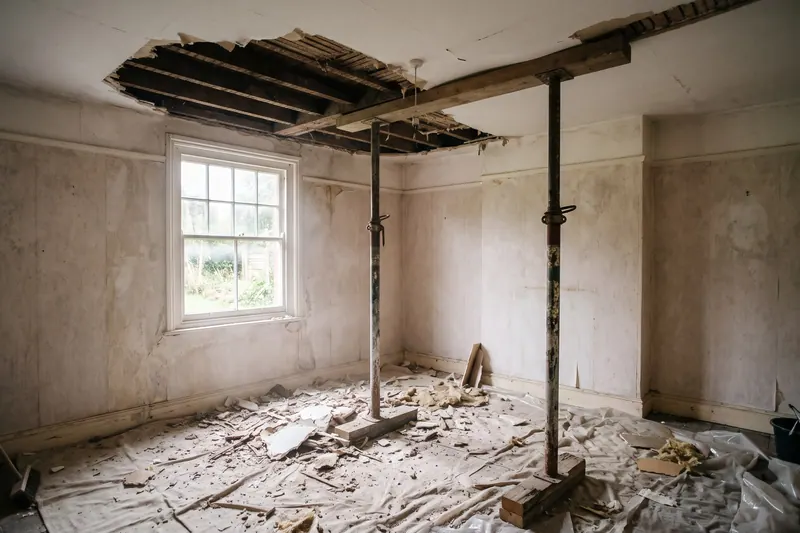
Keep everyone out from under any sagging part of the ceiling. If water is near lights or sockets, switch the electricity off at the consumer unit, but only if you can reach it without standing in water. Move what you can, put buckets down and take photos. Our page on collapsed ceilings and floors covers what to do if it comes down.
Do you replace the tiles as well?
We're carpenters. We make the roof safe on the night, then repair the rafters, battens, boards and fascias that sit under the covering. Laying tiles and slates and dressing lead is a roofer's job, and we'll work alongside yours or the one your insurer appoints. Plenty of storm repairs need both trades, in that order.
Our chimney has been damaged. Can you make it safe?
We can take down loose pots and cover the roof round the stack. A chimney that is leaning or moving is a different matter, because it can fall through the roof or into the street. Keep everyone clear of it and tell us when you call. That needs a structural view before anyone works near it.
Other storm damage, and the permanent roof repair


Is the storm letting water into your house?
Ring or WhatsApp us on 07494 000065, day or night. We'll tell you honestly when we can get there, make the roof safe, and come back to repair the timber once the weather has passed.
Useful to send
- Photos of the roof from the ground or a window
- Which room the water is coming into
- Your postcode and how many storeys the house has