
Carpenters and builders in Tadworth
Tadworth's 1930s to 1950s houses near the station suit lofts, rear extensions and new kitchens, all built on chalk. Next door, Kingswood, Walton on the Hill and Chipstead have their own design rules, and the council expects plain clay tiles there, not slate. From our base in Crawley it's the M23 and M25 most of the way.

Reigate & Banstead council, North Downs chalk, KT20 and CR5
- Building control
- Southern Building Control Partnership
- Highways and county
- Surrey County Council
- Postcodes
- KT20, CR5
- From our base in Crawley
- About 13 miles north
Station estates in Tadworth, Arts and Crafts houses around it
Reigate & Banstead's own design guide uses Tadworth as its example of 1930s to 1950s private estates built within walking distance of the station, and Harendon and Mabbots as a later one. That means brick and tile, gables, hips, bays and dormers: houses with room in the roof and garden at the back, which is why most of the work here is lofts, rear extensions and kitchens.
The village is under a mile across and falls from about 180 metres to 151 metres. There are no streams, because the chalk soaks the water up. Kingswood, Walton on the Hill and Chipstead are a different stock: big Edwardian and Arts and Crafts houses with steep tiled roofs, tile hanging, roughcast and white painted joinery.
Special character areas and conservation areas around Tadworth
Tadworth itself has no conservation area on the council's list, so ordinary householder rules apply to most of the station estates. The villages around it are another matter.
Residential Areas of Special Character
Kingswood, Walton on the Hill and Chipstead are named in the council's 2021 design guide. It says slate and slate colour tiles are not suitable and plain clay tiles are expected, and asks owners to keep trees, side gaps, hedges and unkerbed grass verges, and to avoid high eaves, parapets and big hard standings.
Kingswood Conservation Area
Designated in June 2009 round the station, The Glade and Waterhouse Lane. The houses were built between 1909 and 1913, mostly by Paxton Watson, with 50 degree roofs, sprocketed eaves, catslides and leaded casements.
Walton on the Hill Conservation Area
Two parts: the old village round Walton Street, the Mere Pond and Chequers Lane, and the Arts and Crafts houses along Nursery Road, The Heath and Heath Drive. Older houses carry peg tiles, flint and tile hanging; the later ones handmade clay tile.
Article 4 and trees
The council says Article 4 directions cover most of its conservation areas, but its own Kingswood draft said there was none there. Check the council's map before changing windows, doors or roofs. Cutting or felling a tree in any conservation area needs six weeks' notice to the council.
Steep clay tile roofs cut by hand, not off a truss order
A 50 degree Arts and Crafts roof with hips, catslides and a big stack doesn't come as trusses. Any extension or re-roof on one in Kingswood or Walton means cutting rafters on site to match the old pitch, then laying plain clay tiles the council will accept. That's carpentry first and roofing second, and it's the part of the job we're most particular about.
Get the pitch wrong and the new roof never sits right against the old one, whatever goes on top.

Loft conversions on Tadworth's 1930s and 1950s houses
Hipped 1930s roofs often need a hip-to-gable or a rear dormer to give enough room. Under permitted development a loft conversion can usually add up to 40 cubic metres to a terraced house, or 50 cubic metres to a detached or semi-detached house, counting any earlier roof extensions. The new roof can't be higher than the existing roof or extend beyond the front roof slope facing a road, and dormers should normally be set back at least 20 centimetres from the original eaves.
The stairs decide more lofts than the roof does. Loft stairs normally need 2 metres of headroom. Where the roof won't allow it, 1.9 metres at the centre and 1.8 metres at the side can be accepted. Additional restrictions apply on designated land, such as conservation areas, so we check with the council before work is planned.

Our services for Tadworth homes, plus Reigate pages nearby
Each service has its own page. Our Reigate pages carry the service-by-service detail for this side of the borough, with the same council and building control team.
Building work
Lofts, rear extensions and knock-throughs on the station estates, and extensions designed to sit with Arts and Crafts houses.
Roofing and cladding
Cut roofs and repairs under plain clay tiles, and flat roofs on the back of 1930s houses.
Kitchens and interiors
Kitchen fitting in new extensions and older rooms, plus doors and finishing joinery.
Decking and garden
Garden rooms, oak frame buildings and decks for the long gardens of Kingswood and Walton.
Kingswood, Walton on the Hill and Chipstead near Coulsdon
All three share Tadworth's council and chalk downland, and all three have stricter rules on materials than Tadworth does.
Kingswood KT20
Brewer and MP Cosmo Bonsor brought the railway here in 1897 and sold the land in 1906; the houses round the station followed between 1909 and 1913. Not to be confused with Lower Kingswood, a separate village at M25 junction 8.
Walton on the Hill KT20
Pond, green, church and manor house, then Arts and Crafts houses after Walton Heath golf course opened in 1903. The house built for Lloyd George on Nursery Road was bombed by suffragettes on 19 February 1913.
Chipstead CR5
The Surrey Chipstead, near Coulsdon, not the one by Sevenoaks. Two thirds of its houses are detached, and starting in 1902 John Acton Garle built cottages at Ruffetts End reusing doors and windows from Newgate Prison.
What Tadworth owners ask before building
Something else? Call or WhatsApp 07494 000065.
Is Tadworth a conservation area?
No. Tadworth isn't on the council's conservation area list, so most houses round the station have normal permitted development rights. Kingswood and Walton on the Hill are conservation areas, and Kingswood, Walton and Chipstead are also Residential Areas of Special Character, so check which side of the line you're on before you plan.
Can we use slate on an extension in Walton on the Hill?
Expect the council to say no. Its 2021 design guide says slate and slate colour tiles are not suitable in Walton, Kingswood and Chipstead, and that plain clay tiles are expected. Matching the pitch and the tile of the house is what gets an extension through, so we plan the roof timbers around it from the start.
Does building on chalk change the foundations?
It can. Tadworth sits on chalk, and Kingswood and Chipstead have clay with flints or Reading Beds clay over it, so ground can change across one street. A trial hole shows what's actually there before the groundwork is priced, and building control agrees the foundation depth on site.
Who checks the building work in Tadworth?
Building regulations go to the Southern Building Control Partnership, which covers Reigate and Banstead, Mole Valley and Tandridge. Planning sits with Reigate & Banstead until East Surrey Council takes over on 1 April 2027. You can also use a registered private building control approver.
How do you get to Tadworth from Crawley?
Up the M23, along the M25 to junction 8, then the A217 north. Tadworth is about 13 miles from our base in a straight line, and the motorway does most of the work.
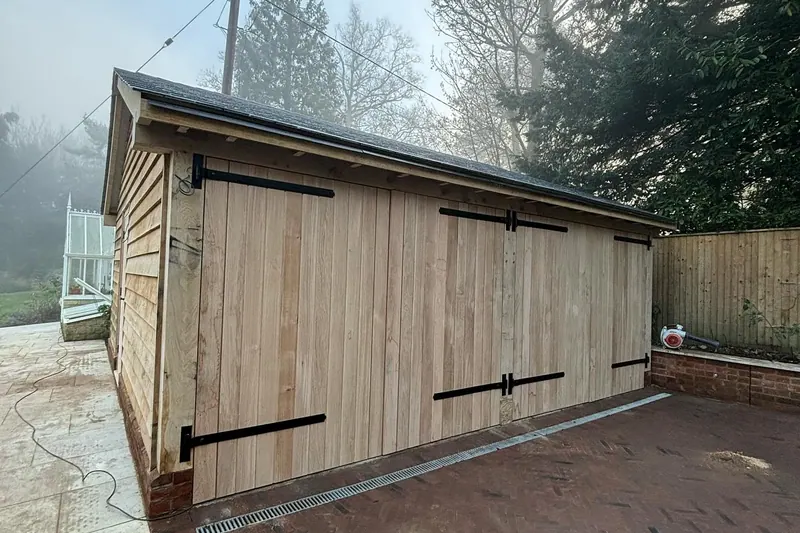
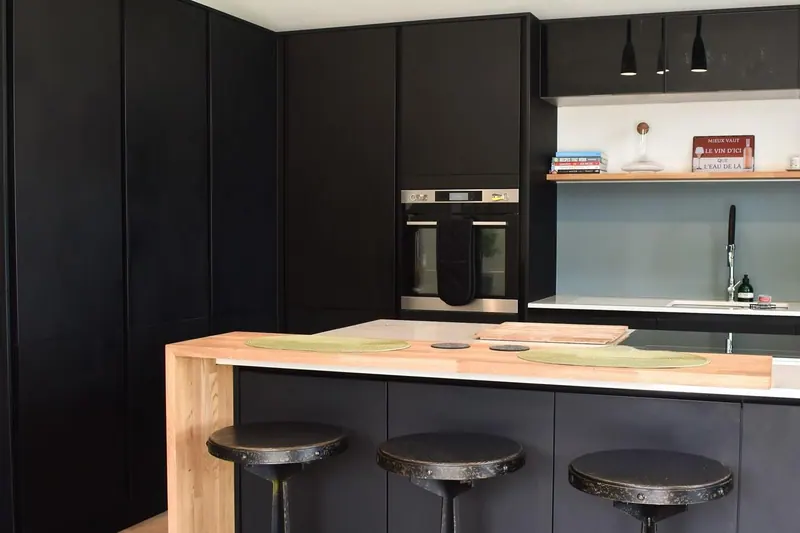
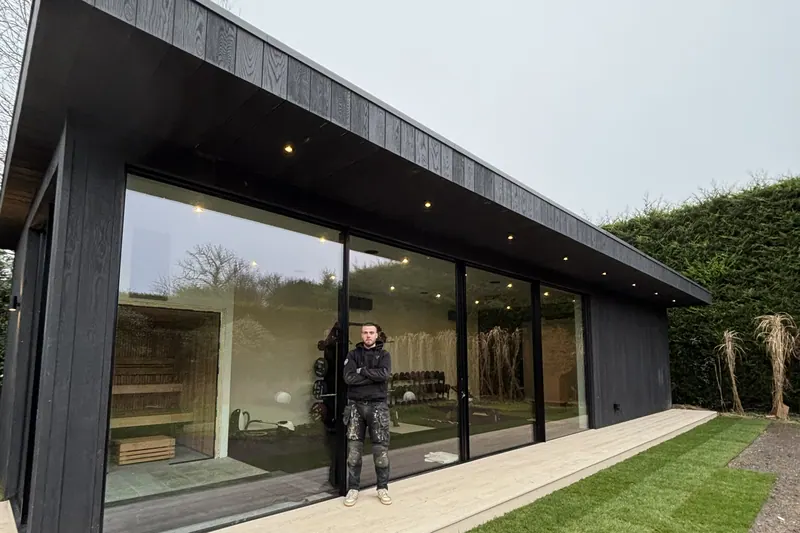
Oak frames, kitchens and garden buildings we've finished
We haven't posted a Tadworth job yet. These finished jobs are the kind of work Tadworth, Kingswood and Walton houses ask for.


Next door to Tadworth
- ReigateAbout four miles south, under the downs, with the same council and building control.
- RedhillAbout four and a half miles south-east, also Reigate and Banstead.
- MersthamAbout four miles south-east, also Reigate and Banstead, with two conservation areas of its own.
- DorkingAbout six miles south-west, in Mole Valley District.