
Forced door and frame repairs, day or night
Yes, ring 07494 000065 at any hour and we'll tell you honestly when we can get there. A kicked or jemmied door nearly always fails at the frame, not the door, so we can often splice in new timber, refit the keep and have it locking again. If it can't lock tonight, we secure it and come back.

- Hours
- 24 hours, 7 days, nights, weekends and bank holidays included
- Usual damage
- Split frame at the keep, torn hinge side, split lock stile
- The repair
- New softwood spliced into the frame, then the keep and lock refitted
- Tonight or later
- Locking the same visit where we can, otherwise secured and booked in
Why the frame splits and the door usually doesn't
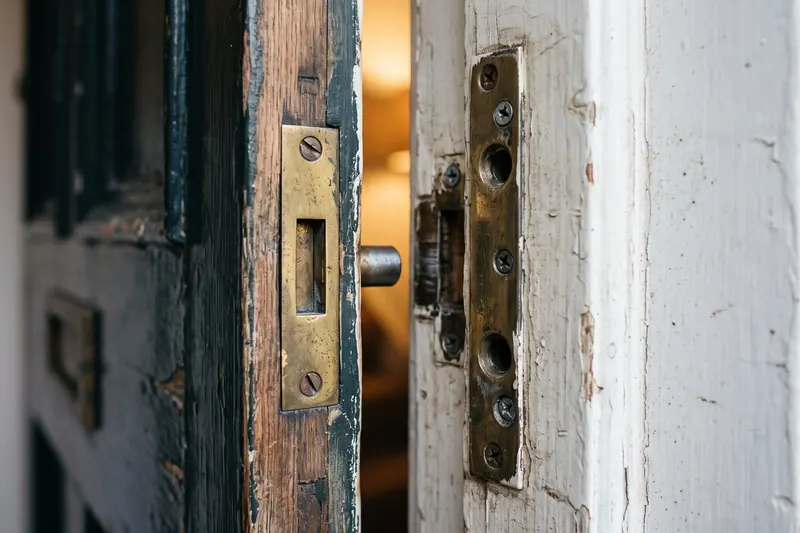
When a door is kicked or barged, all that force lands on one small spot: the keep, the steel plate in the frame that the lock bolt shoots into. Behind it, once the frame has been rebated for the door and cut out for the bolt, there isn't much timber left. The keep is often held by short screws into that thin strip. So the frame gives first. It splits along the grain, up and down from the keep, and the lock stays in the door with the bolt still out, exactly as it was locked.
That's the good news. A split frame is a carpentry repair, and a quick one. The door itself might have a cracked stile round the lock, a few dents and some torn paint, but most survive. Sometimes the hinge side suffers too, with screws ripped out of the frame or a hinge bent. And a jemmied door looks different again: crushed timber and pry marks along the edge where a bar has been worked in.
A door forced by the police or the fire service breaks the same way and gets the same repair. Who pays is a different question, covered on our page about repairs after police entry.
The repairs we make to forced doors and frames
We match the repair to the damage, and tell you which it is before we start.
Split frame at the lock
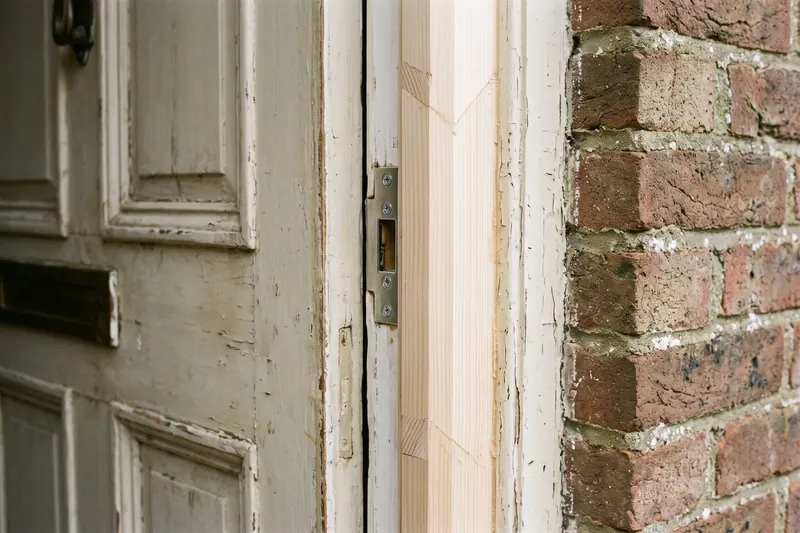
The split section cut out back to sound timber, a new length of softwood spliced in, and the keep re-cut and fixed with long screws.
A whole new jamb or lining
If the split runs most of the height, or the frame is rotten as well, we replace that side of the frame rather than patch it.
Split lock stile on the door
Glued and clamped where the crack is clean, or new timber let in round the lock. Then the mortice is cut again and the lock refitted.
Hinge side and stop beads
Torn screw holes plugged with timber, hinges replaced and re-screwed, and the stop beads and architrave put back.
A door beyond repair
A new timber door hung in the existing frame, trimmed to fit and with the lock and hinges cut in. Usually not the same night.
uPVC and composite doors
These run on multipoint locks made for that door. We secure the opening, and the door maker or a locksmith deals with the mechanism.
How a split frame is spliced back together
The split timber comes out first, cut back past the end of the crack to wood that's sound and dry. We make the cuts at an angle rather than straight across, so the new piece laps over the old instead of butting against it. That's a scarf joint. It's stronger, and the line is far less obvious once it's painted.
The new piece is planed softwood, sized to the old frame and shaped to its rebate and any moulding. It's glued and screwed into place, then planed flush. Then the keep goes back in, this time with screws long enough to reach through the frame into the wall or stud behind it, which is a lot of what decides whether it'll split again.
Bare timber is primed before we leave, ready for you or your decorator to paint. Matching the paint is the one bit we can't do on the night.

From the phone call to a door that locks
Where it can't lock tonight, we fix it shut or fit a temporary ply door and come back.
Ring us
You
Say whether the door closes, whether it's timber, uPVC or composite, and whether it's a house or a flat. Photos of both sides help.
Report it
The police
If it was a break-in, report it and keep the crime reference number. Leave the door alone until they've seen it, if they want to.
Secure tonight
Our team
Photos first. Then a splice and refitted keep if it can be done there and then, or the door made secure until it can.
The claim
Your insurer
Send our photos and itemised invoice. If the permanent repair is still to come, agree it with them before it's done.
Locks
The locksmith
A new cylinder if the keys were taken, and multipoint gear on uPVC or composite doors. We fit timber locks ourselves.
The proper repair
Our team
Splice or new jamb, door repaired or replaced, beads and architrave back on, primed and ready for paint.
What to tell us about the door
- Your postcode and whether it's the front, back or a side door.
- What the door is made of: painted timber, hardwood, uPVC or composite.
- Whether it still closes, and whether the lock still turns.
- Whether it's a house or a flat. A flat front door is usually a fire door.
- If the keys were taken, so the locks get changed as well.
- Who forced it: a burglar, the police, the fire service or a locksmith.
Does a forced door repair need Building Control?
Usually not. Repairing a frame, or hanging a new door in the old one, isn't the kind of work the Building Regulations control. Replacing the whole doorset, frame and all, is. Flats are the exception worth knowing about, because a flat front door is a fire door and has to keep working as one.
| Rule | What it means for you | Source |
|---|---|---|
| A controlled fitting means the whole door unit, frame included. Replacing a door in its existing frame is not providing one, and doesn't have to meet the energy efficiency requirements. | A splice, a repaired frame or a new door in the old frame needs no Building Control. A complete new doorset does. | Approved Document L, Volume 1, para 10.6 |
| The security requirement in Part Q, with its secure doorsets tested to PAS 24:2012, applies to new dwellings only, including those formed by a change of use. | A repaired door on an existing house doesn't have to meet PAS 24. Stronger fixings and a better keep are still worth having. | Approved Document Q, para 0.2 and para 1.2 |
| Fire doorsets, including those to flat entrances, should have a self-closing device. | A flat's front door has to close itself and seal as a fire door after it's repaired. We don't remove closers or swap in an ordinary door. | Approved Document B, Volume 1, para C5 |
| In blocks of flats with storeys above 11 metres, the responsible person must use their best endeavours to check flat entrance doors at least every 12 months, and residents should report faults or damage to doors immediately. | If you're in a block, tell the managing agent your front door was forced. They may need a say on how it's repaired. | GOV.UK fact sheet: fire doors (regulation 10) |
Checked November 2026 against Approved Documents B, L and Q and the Fire Safety (England) Regulations 2022
Forced door repairs that don't last, and what we do instead
A forced door that's been patched to get it shut tonight will be the easiest door on the street to force again.
- The shortcut
The split frame filled with filler or glued and painted over
What we do insteadThe split section cut out and new timber spliced in on an angled scarf
- The shortcut
The keep screwed back on with the same short screws
What we do insteadLong screws through the frame into the wall or stud behind it
- The shortcut
A metal plate screwed over the split to hide it
What we do insteadA proper repair underneath, with any reinforcement added as an upgrade, not a cover-up
- The shortcut
A new door forced into a frame that's twisted from the impact
What we do insteadThe frame checked and re-fixed straight first, then the door hung to it
- The shortcut
The closer taken off a flat's fire door because it no longer shuts
What we do insteadThe door and frame repaired so it closes into the frame on its own
Door kicked in and won't lock? Ring or WhatsApp 07494 000065 at any hour, with a photo of the frame by the lock if you can.
Call 07494 000065, 24/7Questions people ask about forced door repairs
Something else? Call or WhatsApp 07494 000065.
Can the frame be repaired, or does it need a new door?
Most of the time the frame is repaired and the door stays. A clean split at the keep is spliced with new timber, and the door goes back on its own hinges. A new door only makes sense when the door itself has split badly through the lock stile, or was already in poor shape. We'll show you which before anything's ordered.
Will the repaired frame be as strong as before?
Usually stronger. The original keep was probably held by short screws into a thin strip of timber. The new one goes into sound timber with screws long enough to reach the wall or stud behind. For more than that, a frame reinforcing strip or hinge bolts are covered on our door security after a burglary page.
Will my insurance pay for the repair?
Damage from a break-in is often covered, but check your policy, and report the claim before the permanent repair if you can. Keep the crime reference number, our before and after photos and the itemised invoice together. If we've only secured the door tonight, the insurer may want to agree the proper repair first.
The burglars took my keys. What now?
Then the locks need changing, whatever the state of the door. On a timber door with a standard mortice lock or night latch, we can fit new ones while we repair the frame. Euro cylinders on uPVC and composite doors are a quick swap for a locksmith, and we can arrange for one to come.
My front door is a flat's fire door. Can you repair it?
We can repair the timber, but tell us it's a fire door when you ring. It has to close on its own and fit the frame closely after the repair, so the closer stays and the gaps are checked. In a block, let the managing agent know too. In blocks over 11 metres they have to check flat entrance doors every year, and they may want a say.
Work that often comes after a forced door


Door forced and won't lock?
Ring or WhatsApp 07494 000065, any hour. Tell us what kind of door it is and which side gave way, and we'll tell you honestly when we can be there and whether it'll lock tonight.
Useful to send
- Photos of the frame by the lock, from inside and out
- What the door is made of, and whether it's a house or a flat
- Your postcode, and whether the keys were taken