
Period doors matched, restored and rehung
Old houses rarely take a standard door. Frames lean, heads dip and openings were built to imperial sizes long before metric leaves arrived. We hang new doors in original frames, trim them to the opening rather than the other way round, and keep the old linings wherever they're sound.

- Old openings
- Imperial sizes, dipped heads and frames that have leaned for decades
- Frames
- Kept and packed true wherever the timber is sound
- Matching
- Plain doors beaded and moulded to match the originals you're keeping
- Listed houses
- Consent checked before an original door is changed or removed
Why period openings fight standard doors
This page is part of our door fitting service, for the houses where a door from the shelf won't simply drop in.
A Victorian terrace, an Edwardian semi or a 1930s house has had a century to settle. Floors have dropped towards the middle of the room, the head of the frame dips to one side, and one jamb leans out of plumb while the other stays put. Nothing about the opening is square any more, and a square door shows it. It catches at the top corner, leaves a wedge of daylight down the latch side and drags on the floor as it swings.
Size is the other problem. Older houses were built to imperial measurements, so most openings were made for doors 1981mm (6 feet 6 inches) high, in widths that don't match today's metric doors, which are 2040mm high. A metric door is too tall for an imperial opening before you start, and even an imperial door from a merchant still has to be trimmed to the frame it's going into.
None of this is a reason to rip the frames out. The old linings and architrave are often the best joinery left in the house, and the plaster round them hasn't been touched in decades. Keeping them means the door has to do the adjusting, and that's where the time goes.
Matching new doors to old ones
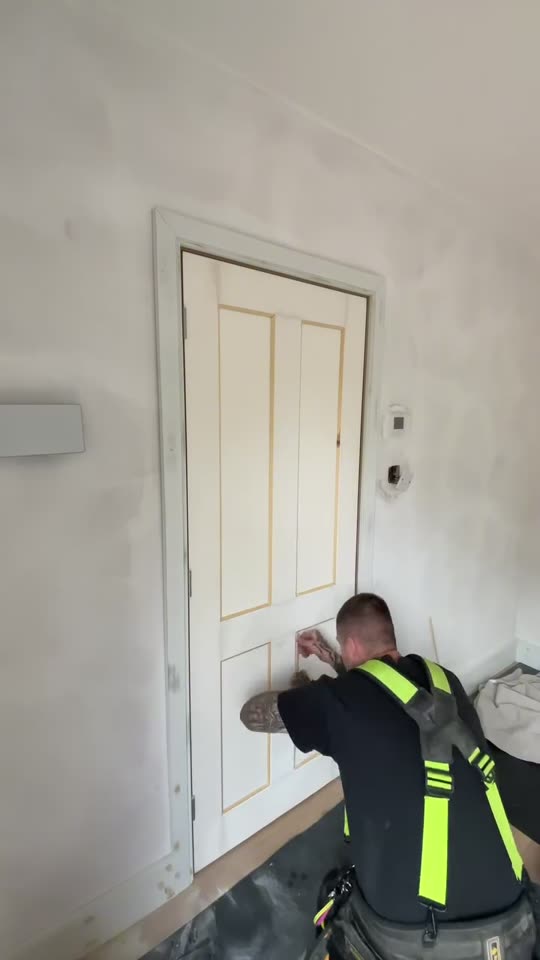
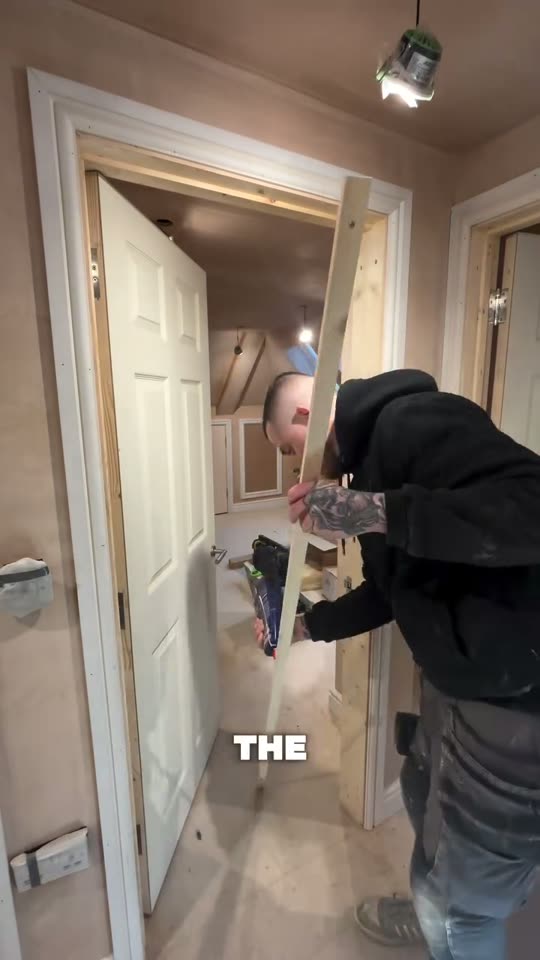
Two clips from our Instagram, filmed on real jobs in older houses.
Measuring an old opening
In an old house one measurement isn't enough, because the opening is a different size at every point. This is what we record at each door before anything is ordered.
- The width between the sides of the lining at the top, the middle and the bottom
- The height from the floor to the head on both sides, as the floor and head rarely run level
- Both diagonals, corner to corner, to show how far the opening is out of square
- Whether each jamb is plumb, and whether the lining is in twist
- Where the old hinges and latch sit, and whether the recesses can be used again
- The floor finish now and any new floor coming, so the gap underneath is right
- The panel layout and mouldings of the doors you're keeping, if the new ones have to match
Trim the door, keep the frame
Once the opening is measured, the new door gets marked to it: the head angled to follow the dip, the hanging edge planed to the line of the jamb, the latch edge eased so the gap stays even all the way down. A few millimetres off each edge is normal. Our October 2026 reel shows the jig we use to hang doors in old frames, which makes the marking out quicker and more accurate, and a reel from a year earlier shows a hinge jig on period doors.
When an opening is a lot shorter than any standard door, cutting a big strip off the bottom leaves a thin rail that looks wrong and weakens the door. Our way is to cut the bottom rail off, trim the door to height, then join the rail back on, so the proportions stay right. The method is on our Instagram, posted in May 2025.
A frame can usually be kept if the timber is sound and it's fixed firmly. A loose jamb gets re-fixed and packed true behind, and a twisted stop gets taken off and refitted to the door. A lining goes when it's rotten, split along its length or so far out that no door would look right in it. Then we fit a new one and match the architrave to what's there.

Matching what's there
When some of the original doors stay, the new ones have to sit beside them without looking like replacements. These are the details we match.
Panel layout
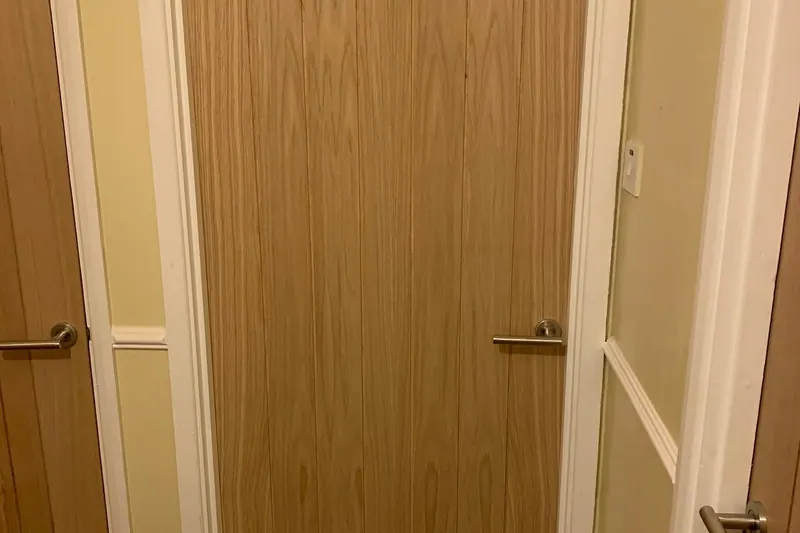
Four-panel, six-panel or ledged and braced. Plain doors can be beaded to match the panels on the doors you're keeping.
Mouldings and stops
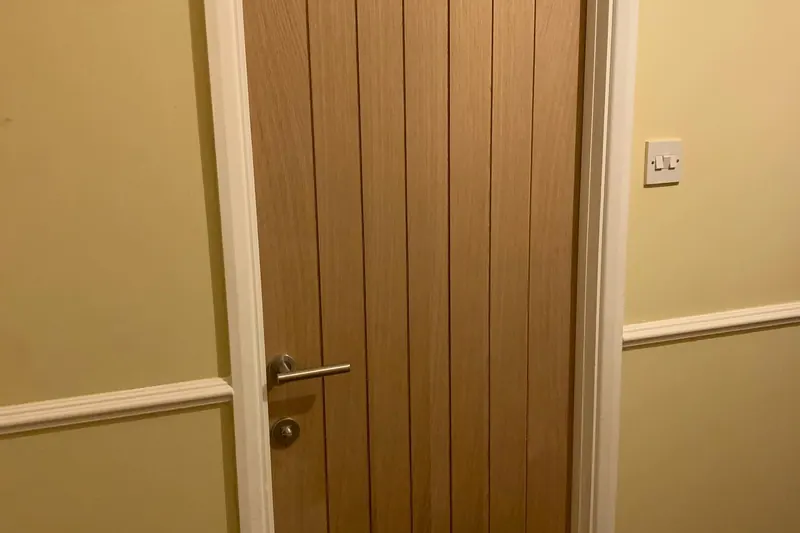
Stop beads and architrave matched in profile and size, so a new frame or a repaired one reads like the rest.
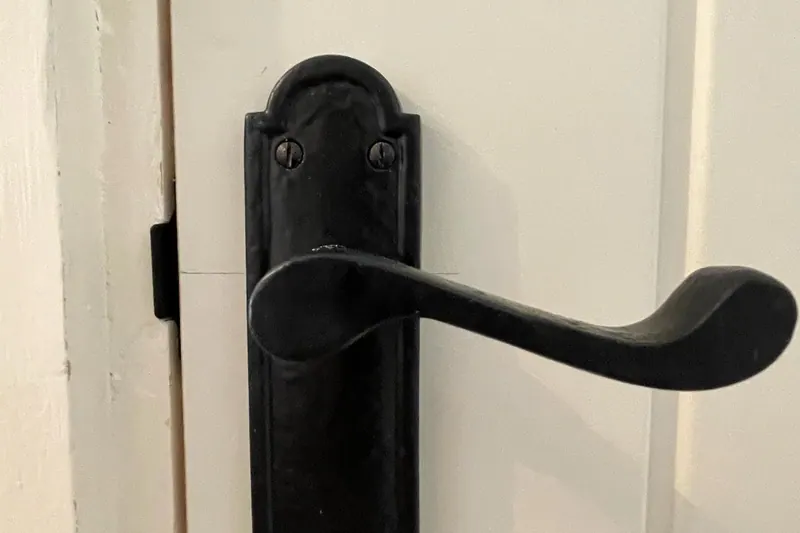
Handles and hinges
Black, brass or chrome, chosen to suit the house. The finish should run the same through every door on a landing.
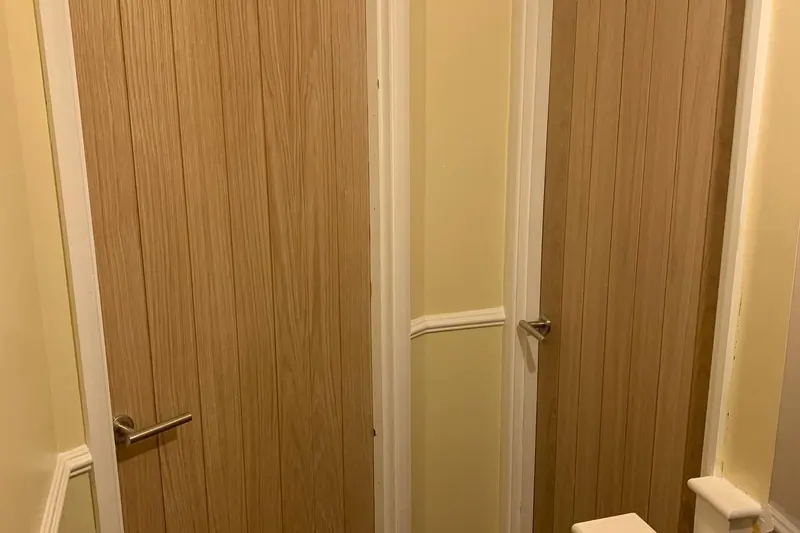
Doors in a run
On a landing with several doors, the heads, gaps and handle heights line up, even when the frames don't.


Do I need consent to change doors in a listed house?
Often, yes. In a listed building, consent is needed for any work that affects its character, and that covers internal doors as well as the front door. Outside listing, a new door hung in an existing frame needs no Building Control approval. In a conservation area, check before a front door changes.
| Rule | What it means for you | Source |
|---|---|---|
| Listed building consent | Altering a listed building in a way that affects its character as a building of special interest needs consent from the council first, inside or out. Original doors, frames and architrave can all count. | Planning (Listed Buildings and Conservation Areas) Act 1990, section 7 |
| Work without consent | Carrying out unauthorised work to a listed building is a criminal offence. The owner, and whoever does the work, can both be liable. | Planning (Listed Buildings and Conservation Areas) Act 1990, section 9 |
| Conservation areas and Article 4 | A front door that looks like the old one usually needs no planning permission. Where the council has an Article 4 direction, a noticeably different door may need it. | Planning Portal: doors and windows |
| Period doors in a loft conversion | Where a loft conversion means doors onto the stairs must resist fire, doors of historical or architectural merit should be looked at for keeping and upgrading before they're replaced. | Approved Document B, Volume 1, para 2.22 |
| A new door in an existing frame | Replacing a door in its existing frame isn't a controlled fitting under the energy rules, so it doesn't need Building Control. | Approved Document L, Volume 1, para 10.6 |
Who signs it off
- You: listed building consent, before the work is booked
- Your council's conservation officer: what they'll accept on a listed house
- Lewis Brothers: which doors can be repaired and which have to be replaced
- Building Control: fire doors in a loft conversion
Checked November 2026 against the Planning (Listed Buildings and Conservation Areas) Act 1990, the Planning Portal and Approved Documents B and L
Door details from our Instagram
The parts of a hung door that show whether it was done with care: the gaps, the latch and the hinges.
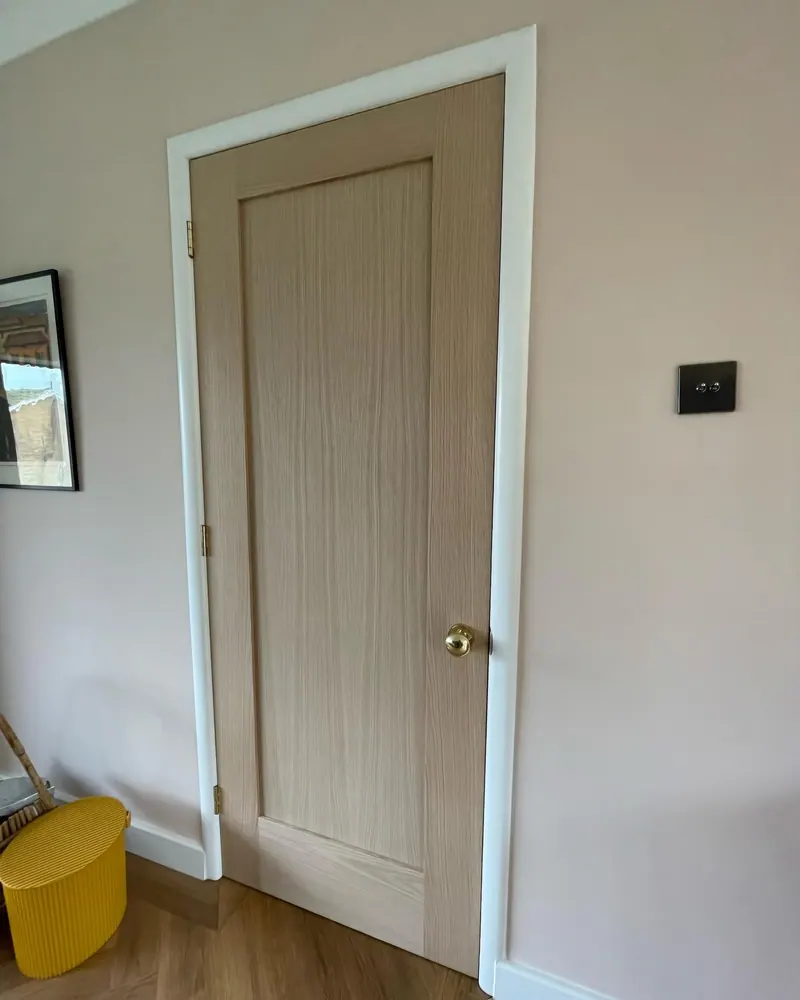
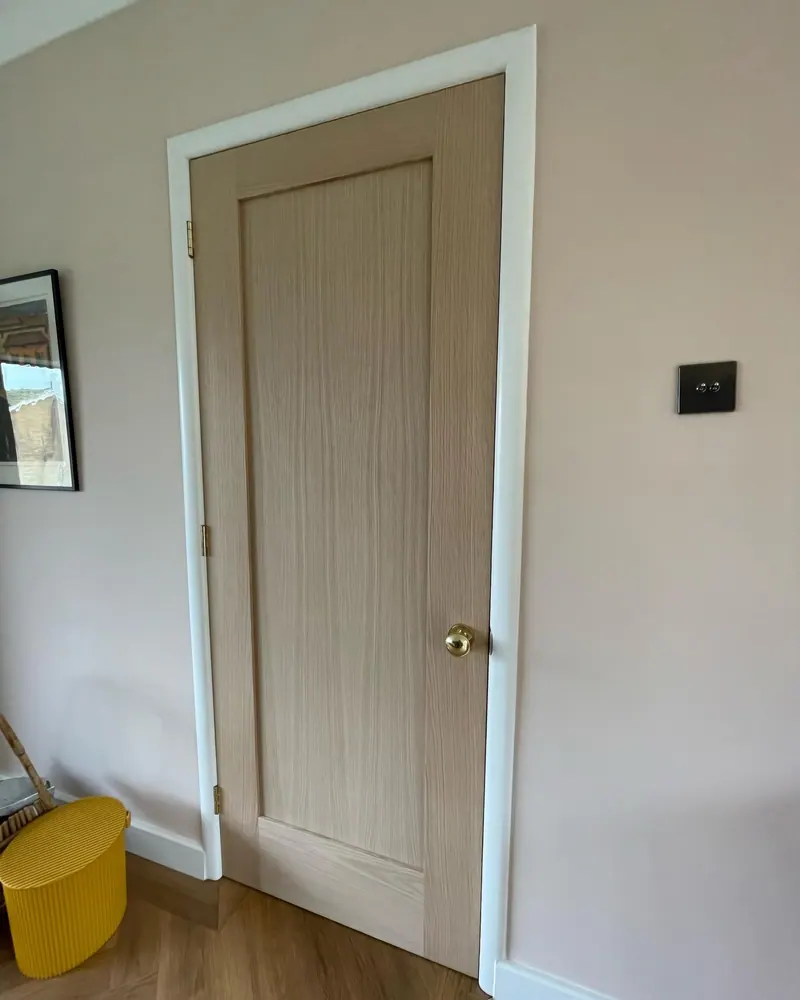
Our work, January 2022. Oak veneer door on brass butt hinges. 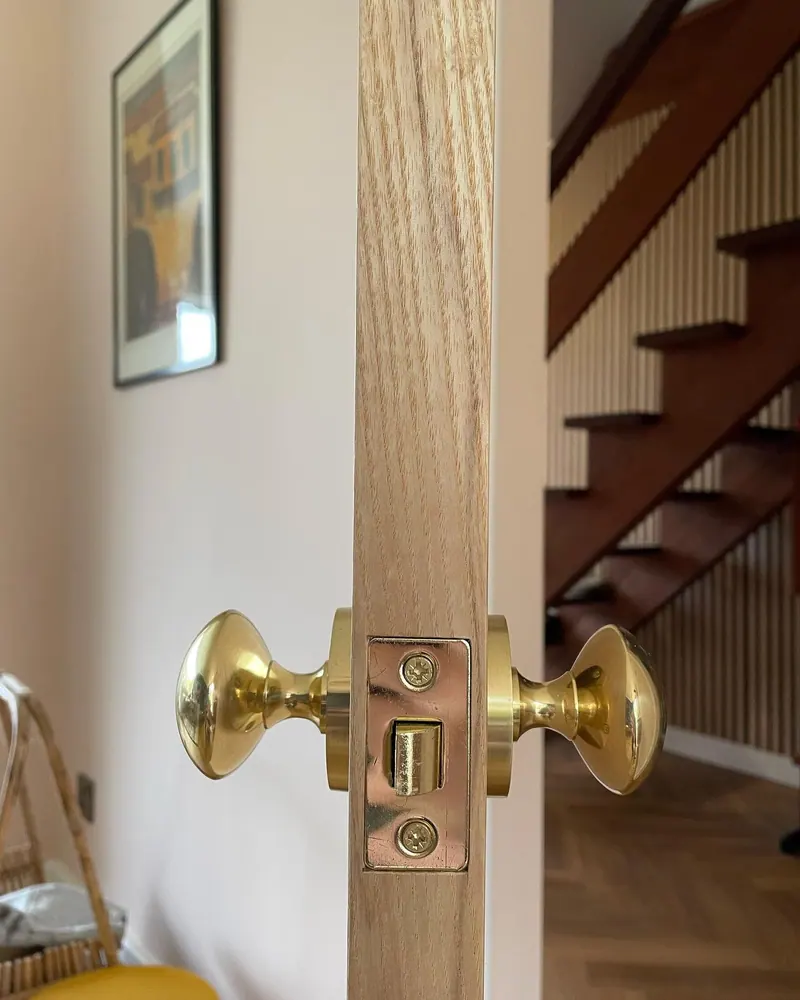
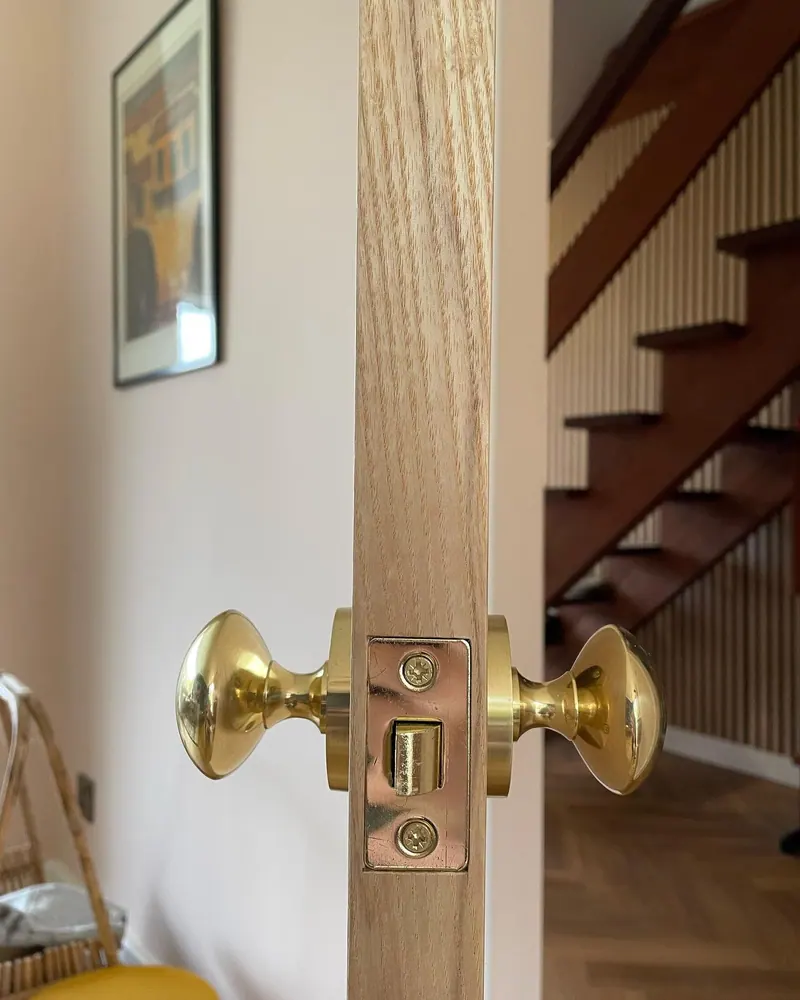
Our work, January 2022. Latch routed in flush, with brass knobs either side. 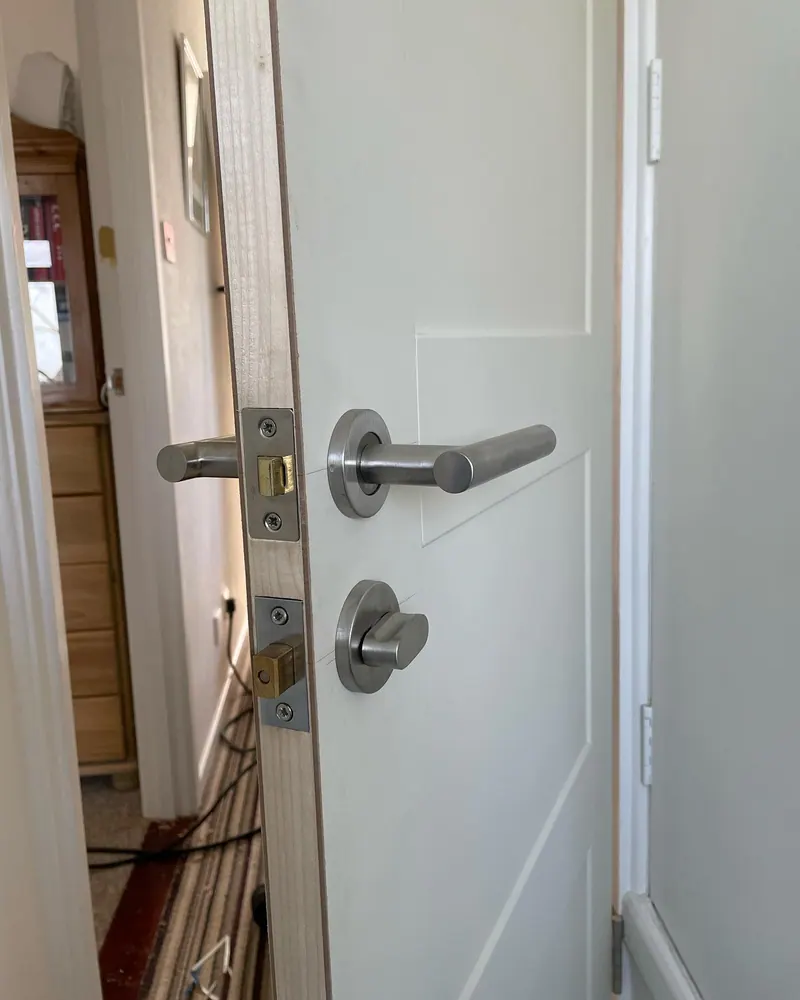
Our work, February 2022. Latch and deadbolt morticed into a new white shaker door.
Lead paint on old doors and frames
Old doors and frames often carry layers of paint going back decades, and the older coats can contain lead. The Health and Safety Executive says the risk comes mainly from paint put on before the 1980s, and that it becomes a danger when it's turned into dust or fumes. Sanding or burning it off is how that happens.
So on an old door we don't dry sand painted edges or strip paint with a blowlamp. Where a painted edge has to be eased, we rub it down with wet abrasive paper, which is what the HSE advises instead of dry sanding, then sheet up and clean as we go. If a door needs taking back to bare timber, we'll talk to you about the safest way to do it before anything starts.
If you're not sure what's on your doors, assume the old paint has lead in it until you know otherwise, and keep children and pets away from any dust while the work is going on.
Send us a photo of each old door and its frame, and we'll tell you which can be eased and rehung and which need replacing.
Get a quoteQuestions people ask about period doors
Something else? Call or WhatsApp 07494 000065.
Will a modern door fit my old frame?
Not without work. Most older houses have imperial openings, 1981mm high, and metric doors are 2040mm, so a metric door is too tall before you start. Even an imperial door has to be trimmed to follow a frame that has moved. A few millimetres off each edge is normal. Much more than that, and the bottom rail gets moved.
Can you keep my old frame?
Usually, if the timber is sound and fixed firmly. A loose jamb can be re-fixed and packed true, and the stops can be taken off and refitted to the new door. If the lining is rotten or split, we'll tell you, replace it and match the architrave to the rest of the house.
Can you match my other doors?
Often, yes. In July 2024 we beaded plain flat doors to match the four-panel doors a house already had. We match the panel layout, the mouldings and the handles, and line the doors up so the heads and handle heights run level along a landing, even when the frames don't.
Do I need consent to change doors in a listed house?
Often, yes, and that includes internal doors. Work that affects the character of a listed building needs listed building consent first, and doing it without consent is a criminal offence. Talk to your council's conservation officer before booking anything, and keep the original doors until you have their answer.
Is there lead in the paint on my old doors?
There may well be. The HSE says lead paint is mainly a risk on paint put on before the 1980s, once it becomes dust or fumes. We don't dry sand old painted edges or burn paint off, and we clean up as we go. If you don't know, assume it's there.
Can you fix a door that won't latch?
Usually. The cause is normally dropped hinges, loose screws in the lining, paint built up on the edge, or a frame that has moved with the house. We pack or re-fix the hinges, ease the edge or move the keep, then seal any timber we've planed, so the latch clicks shut with a light push.
Can you fit a fire door in a period house?
Where one is needed, yes. After a loft conversion, the doors onto the stairs have to resist fire, and the guidance says original doors with real merit should be looked at for keeping and upgrading before they're replaced. Building Control will have the final say on the work.
More work for older houses


Period door work town by town
We're based in Crawley and work in older houses across West Sussex and Surrey. Pick your town for the door work we see there.
West Sussex
- CrawleyOur base. Ifield and the old Crawley houses, as well as the new-town estates.
- BillingshurstOlder cottages along the High Street, and barn conversions with odd openings.
- Burgess HillVictorian houses near the station among the later estates.
- CuckfieldListed houses in the old village, where repairing an original door often beats replacing it.
- East GrinsteadOld frames on and around the High Street that have had centuries to move.
- Haywards HeathVictorian and Edwardian houses, with Lindfield's listed cottages just up the road.
- HorshamVictorian streets and the old houses on The Causeway, where period doors are worth keeping.
Surrey
- CaterhamVictorian terraces on the Hill, with four-panel doors worth matching.
- CranleighFarmhouse frames and older joinery on the edge of the Surrey Hills.
- DorkingOlder houses in the conservation areas, where listing matters more than the Surrey Hills.
- GatwickCharlwood's old houses, where low beams and short doors go together.
- HorleySurrey, Reigate & Banstead planning, wet clay by the Mole, and every address in Gatwick's crane zone.
- LingfieldPeriod cottages round the church and Gun Pond, with frames that rarely sit square.
- OxtedOld Oxted and Limpsfield, where original front doors with stained glass are worth saving.
- RedhillVictorian terraces near the centre, with tall imperial openings.
- ReigateVictorian terraces and conservation streets, where a front door needs thought before it changes.
Worth reading before work on an older house


Got old doors that won't close?
Send us a photo of each door and frame, the rough sizes and your postcode. We'll come and measure every opening, then send a written quote that says what each door needs.
Useful to send
- A photo of each door and its frame
- Whether the house is listed or in a conservation area
- Your postcode, and the doors you want to keep