
Decking in Reigate
Reigate has three soils within a mile of the High Street: loose greensand in the centre and on Reigate Heath, Gault clay north of the railway around Wray Common, and Weald Clay at Woodhatch. Each takes a different footing, so we dig before we design and check the conservation area map first.

Reigate and Banstead council, RH2, three soils
- Building control
- Southern Building Control Partnership
- Highways and county
- Surrey County Council
- Postcodes
- RH2, RH3, KT20
- From our base in Crawley
- About 9 miles north
- Protected land nearby
- Reigate's five conservation areas, Article 4 directions, Surrey Hills National Landscape, Metropolitan Green Belt
Sand in the centre, Gault to the north, Weald Clay at Woodhatch
The town centre and Reigate Heath sit on the Folkestone Beds of the Lower Greensand. It is free-draining, which keeps water from lying under a deck, but near the surface it can be loose, so a footing goes down until it reaches sand that will not shift.
Cross the railway towards Wray Common, Doods Road and Wray Park and you are on Gault Clay, the narrow strip that once supplied the yellow Gault bricks seen in the town. Gault is the clay that shrinks and swells with the seasons, and the big Victorian gardens up there have big trees that dry it out further in summer. Footings go below that movement, and the base under the deck is shaped so rain runs away rather than soaking into the clay.
South at Woodhatch, the ground changes again to Weald Clay, once dug for bricks. It holds water after rain and moves in the same way, with the same answer: a drained base, timber kept off the soil, and supports taken down to stable ground.

Article 4, conservation areas and protected trees in Reigate
Five conservation areas in or by RH2
Reigate itself (designated in 1973 and last extended in 2009), Somers Road, Wray Common, Flanchford Road and Colley Lane, and Chart Lane. There is no Church Street conservation area: Church Street sits inside the Reigate one.
Article 4(2) directions
Reigate and Banstead says these have been served on most of its conservation areas. They control changes to the sides of a house that face a road or open space, and designated land carries additional restrictions, so we check with the council before a deck is planned.
Trees, holm oaks and cedars
Trees in a conservation area need six weeks' notice before any work. The borough's design guide singles out holm oaks, planted here in the 18th and 19th centuries, and cedars of Lebanon as part of the town's character.
Reigate Heath
The heath is a Site of Special Scientific Interest of about 160 acres with Bronze Age barrows. Gardens backing onto it need care with access, spoil and anything that strays over the boundary.
Leigh and Buckland
These sit in Mole Valley, not Reigate and Banstead, so applications there go to a different council.
Frames, steps and finished boards from decks we've built
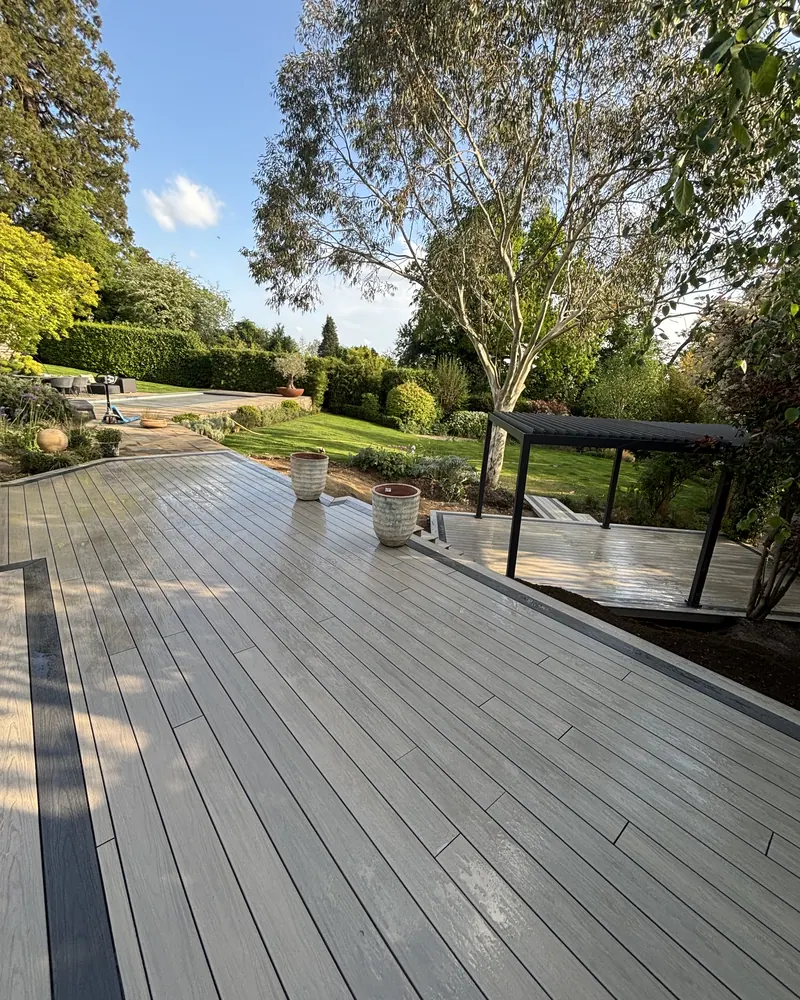
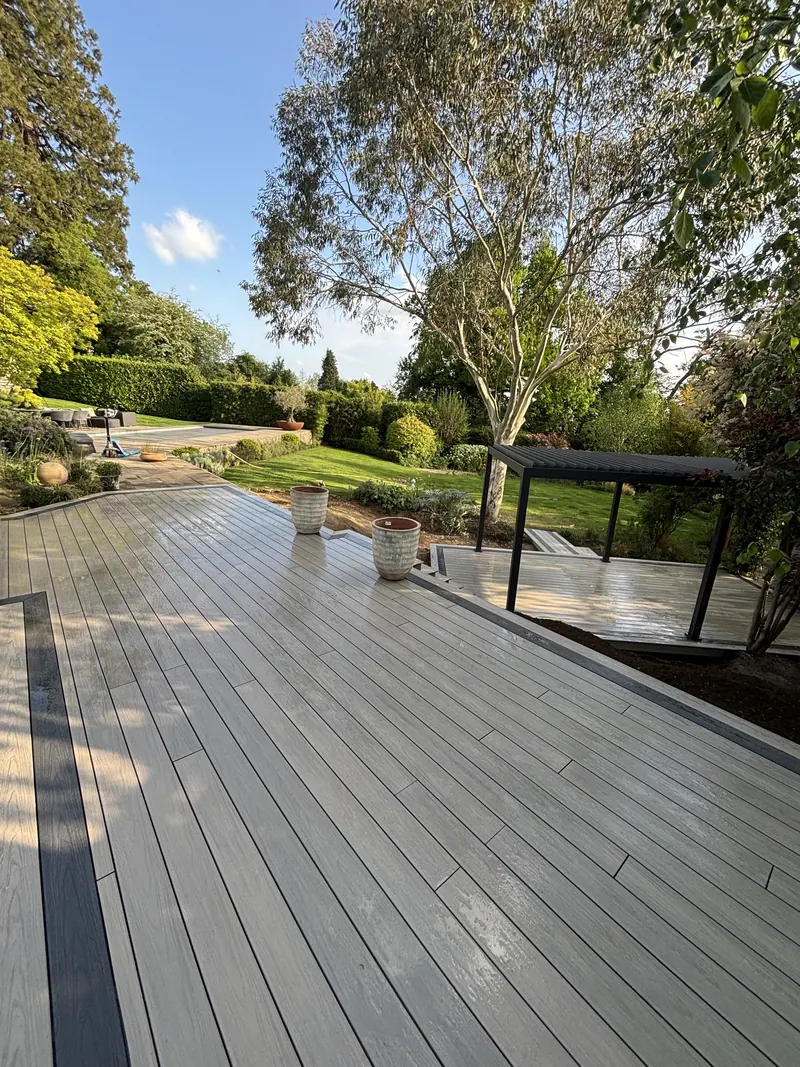
Angled step down to a lower deck, May 2026 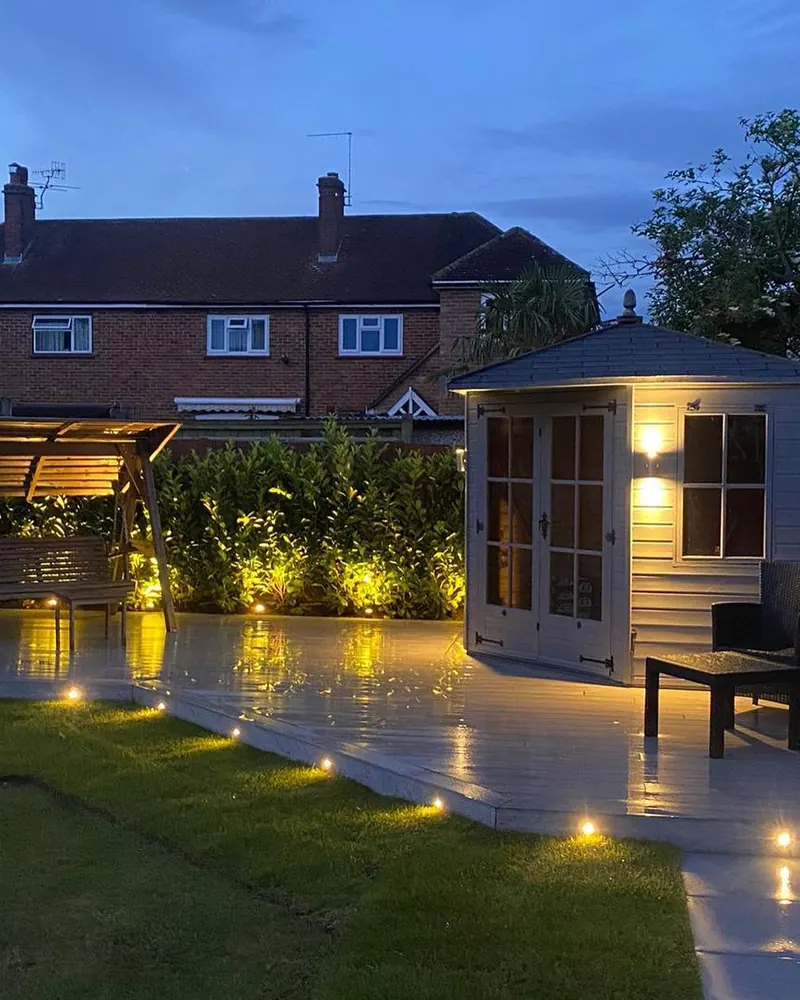
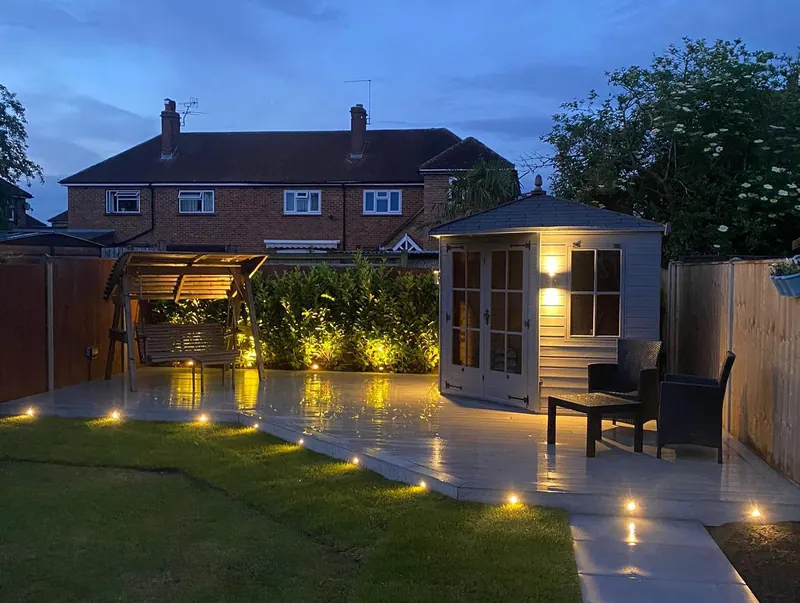
Plinth lighting along a deck fascia, May 2022 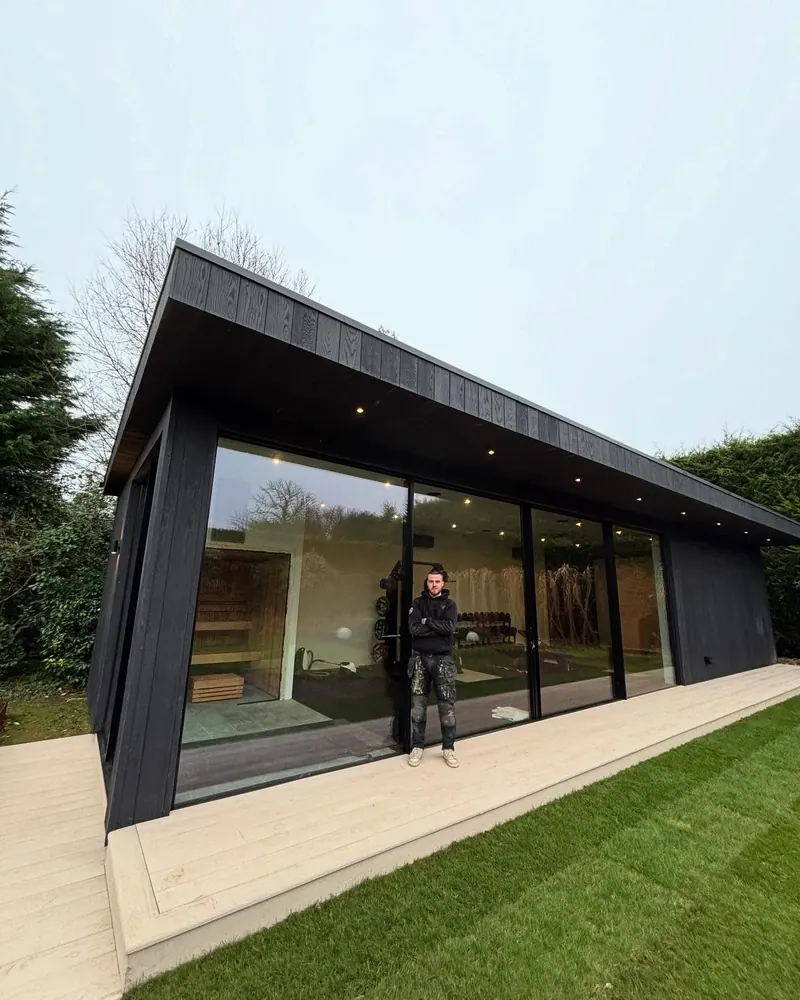
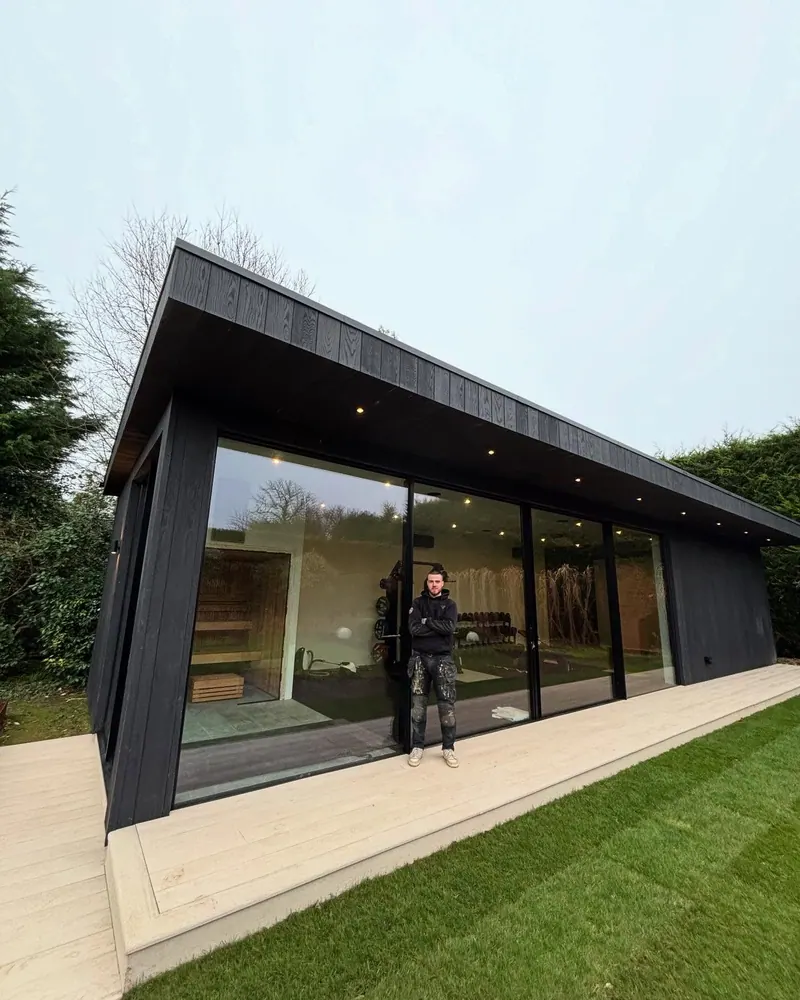
Composite decking along a garden room, December 2024
Reigate deck questions, street by street
Something else? Call or WhatsApp 07494 000065.
We're near Wray Common. Is the clay a problem for a deck?
It needs respect rather than worry. Gault Clay moves between dry summers and wet winters, more so near big trees, so we take footings below the zone that moves and keep the frame off the ground. A deck is light compared with a house, but a post that heaves even a little shows up as a step in the boards.
Our garden is on the sand near Reigate Heath. Is that easy ground?
Easier than clay for drainage, but loose near the surface. We dig until the sand is firm and set the footings there. If your garden backs onto the heath, remember it is a protected site, so nothing, spoil included, should end up over the fence.
Should we get a lawful development certificate for a deck?
In Reigate it is common to. The borough issues three to four certificates for every 1,000 households, a high rate, because owners like written proof that a project is permitted. For a low deck it is optional, but if you plan to sell, a certificate answers the buyer's solicitor straight away.
There's a holm oak right where we want the deck. What can we do?
Design round it. If you are in a conservation area, any work to the tree needs six weeks' notice, and the council treats holm oaks as part of the town's character. We find the roots, keep footings in the gaps, and cut the boards back from the trunk so it has room to grow.
What our deck builds look like, step by step
Every deck starts with a site visit. We take levels across the whole footprint, at the door threshold and at the damp proof course, and look at what the ground is made of. The written quote names the boards, the frame and what it all stands on. Posts and anything near the soil are Class 4 treated timber, composite goes on taped joists with stainless fixings, and the frame stays about 10mm off the wall. More on how we build decks.